Skip to content
AgincourtLocksmith ProsOpen 24/7 (289) 806-4250
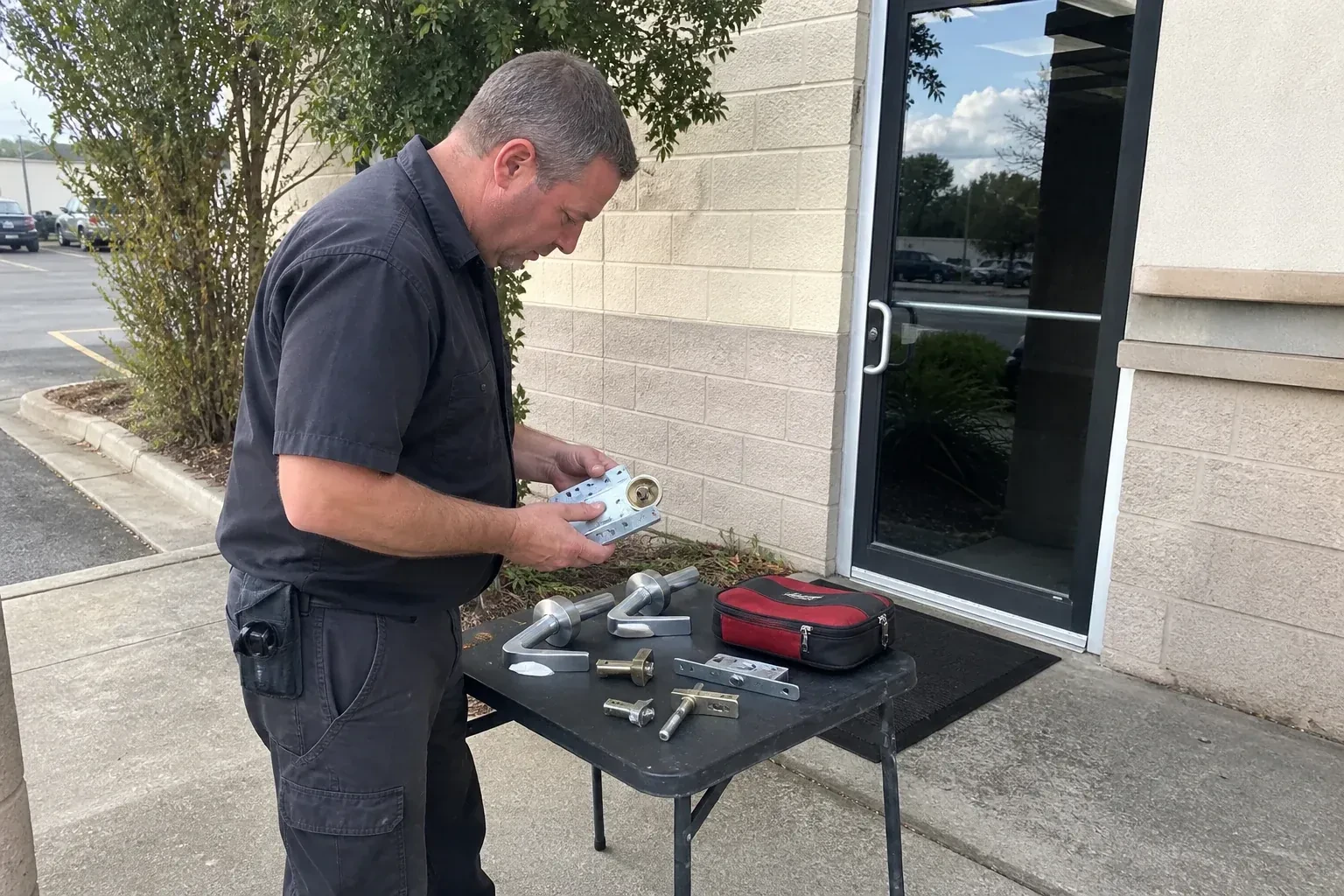
Technician examining detached commercial lock hardware on a table outside a shop entrance. — Business Lockout Service, Clarks Corners

Lockouts · Clarks Corners

Business Lockout Service

Minus eighteen with a wind, and the exterior cylinder on the shop door has frozen solid overnight after yesterday's slush. The key goes in halfway and stops.

In plain words

Heavy commercial doors move, and a good share of business lockouts are really door problems. A glass storefront door hangs on pivots or a continuous hinge that wear with thousands of openings a week, and once the door drops a few millimetres the hookbolt or latch binds against its strike. A hydraulic closer that has stiffened in the cold or lost its adjustment leaves a door that never latched properly the night before. Part of a lockout visit is reading the door: lifting it back into line, adjusting the strike and closer, and making sure the lock is asked to do only what a lock should do.

Sound familiar?Clarks Corners

The call
The heavy glass door has been scraping the threshold for weeks. This morning the key turns, you can hear the bolt trying to move, but it is jammed hard in the strike and the door stays shut no matter how the handle is pulled.
NextHow the visit goes

Business Lockout Service · Clarks Corners

How the visit goes

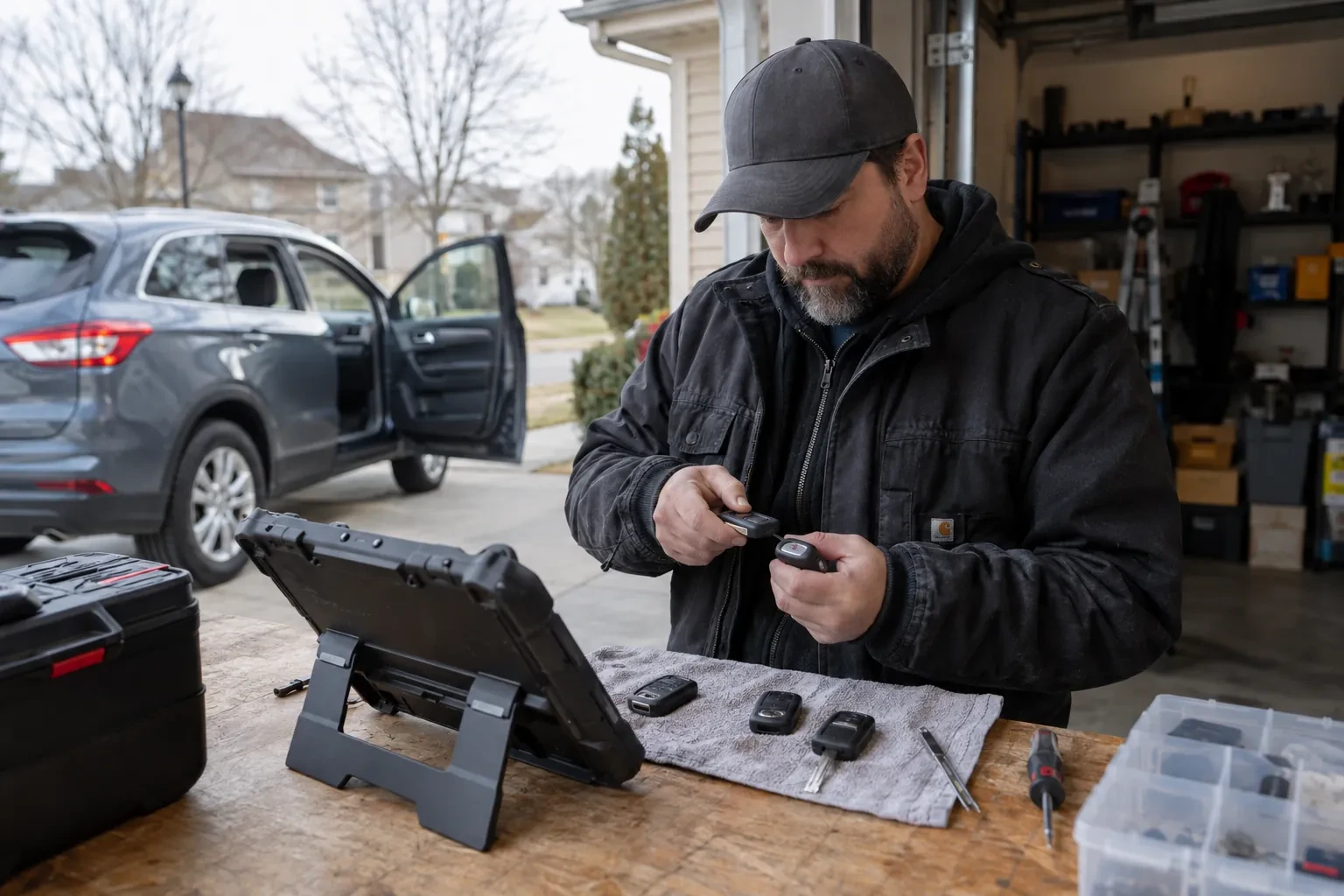
Technician holding two key fobs at a bench with a tablet and three fobs on a gray cloth, an open SUV behind. — Clarks Corners
  1. Scene 1

    What happened to the key

    The story of the key shapes everything after the door opens. A key sitting in an absent manager's pocket means the lock is sound and only entry is needed. A key that was lost on transit or never returned by a former employee is still out there, and the visit should end with that key made useless. A key that turned without result points to a worn cam or a failed deadlatch spring, and a key that snapped calls for careful extraction before any opening. A lock that worked at closing and refuses at opening suggests cold, grit or a dropped door rather than a cylinder fault. A minute on this saves a repeat call.

  2. Scene 2

    Freeing a frozen or bound door

    Ice and misalignment are dealt with by patience and leverage rather than force. A frozen storefront cylinder is treated with lock de-icer or gentle warmth until the plug turns, and the keyway is dried before a dry lubricant goes in. A door that has dropped on its pivots is lifted by hand or with a wedge to bring the bolt back in line with its strike while the cylinder is turned, and the bolt slides free. With the door open the cause is corrected so it does not repeat: pivots or the continuous hinge adjusted, the strike dressed or moved, the closer speed and latching force reset, and salt cleared from the threshold and bottom rail.

  3. Scene 3

    Exit doors that still let everyone out

    Whatever was replaced, a door on the way out of the building still opens from inside with a single motion and no key while people are in it. That standard is why a storefront gets a thumb-turn or paddle inside, a rear door keeps its push bar, and a double-cylinder deadbolt does not go on an exit route. The locksmith checks each door for this before leaving and points out any older hardware, such as a chain or a keyed-inside bolt on a back door, that the business may want to bring into line.

In the van

  • Exit device trim cylinders and dogging keys
  • Storefront deadlatch and hookbolt bypass tools
  • Lock de-icer and dry PTFE lubricant
  • Commercial pick and tension tools
  • Storefront deadlock and deadlatch bodies

What shapes the quoteAgincourt Locksmith Pros

Cold weather on the day
A cylinder frozen solid, a door iced to its threshold or a closer stiff with cold fluid means patient thawing before the opening can start, and a winter call is quoted with that time in mind.
Door, pivot and closer adjustment
When the lockout was really a dropped door or a tired closer, lifting the door, adjusting pivots or a continuous hinge, moving the strike and resetting the closer are quoted as their own item beside the opening.
Distance and access to the door
Travel is part of every call-out, and so is reaching the door: a plaza unit at street level, a suite behind a locked lobby, or a loading dock at the back of an industrial park each take a different amount of the locksmith's time.

FeesSame any hour

Have it ready

Before you call · 0 / 3

(289) 806-4250

Straight answers

We need to open for customers. How do you sequence the visit?

Entry comes first and repairs second. Once authority is confirmed the door is opened, staff go in and start their routine, and the locksmith turns to the cause: extracting a broken key, rekeying for a lost one, re-springing a deadlatch or lifting a dropped door. Anything that can wait for a quieter hour, such as rekeying interior doors, is offered as a return visit so the shop floor is not blocked while it trades.

Will we get something in writing afterwards?

Yes. The visit closes with a written account of which door was opened and how, the condition the hardware was in, anything replaced, the number of keys cut and who received them. Landlords ask for it when locks on a unit change, insurers after a loss, and franchise head offices as a matter of course. Keep it with the lease; it also tells the next locksmith exactly what is on your doors.

What should I have ready when I call?

The address and unit number, which door you are outside, what the lock looks like, and where the keys are: with someone, lost, broken or simply refusing. Say whether there is an alarm or a card reader on the door, who can disarm or confirm your authority, and whether the building has a property manager. If you can send a photo of the lock and the door edge, the right cylinders and cores come on the first trip.

Clarks Cornersinformation

TorontoOntario

Business Lockout Service · Toronto, Agincourt, Agincourt North, Sullivan, Tam O'Shanter

Town
Clarks Corners, Toronto
In business
35 years
Hours
Open 24/7
Nights, weekends and holidays, same fees
Visits
On-site assessment preferred. Request a visit or call.

2021 census: what it means at the door

Every square is one home in a hundred.

  • 58 in 100 homes · older homes
  • About 58% of homes in Toronto were built in 1980 or earlier, according to the 2021 Census.Older doors are usually thicker and made of solid wood, which is good news. They take a deadbolt well, hold longer strike screws, and reward reinforcement. The locksmith measures the thickness and backset so new hardware fits without fresh holes.
  • Single-detached houses make up about 23% of homes in Toronto (2021 Census).Suite doors in buildings often have a viewer, a chain and a deadbolt fitted at different times. A locksmith can tidy that into one sound arrangement, with a properly set deadbolt and a strike that holds, without altering the door's face.

Source: Statistics Canada, Census Profile

Open Clarks Corners in Google Maps

On-site assessment

Request a visit.

Minus eighteen with a wind, and the exterior cylinder on the shop door has frozen solid overnight after yesterday's slush.

(289) 806-4250, open 24/7.