Sound familiar?Toronto
- The call
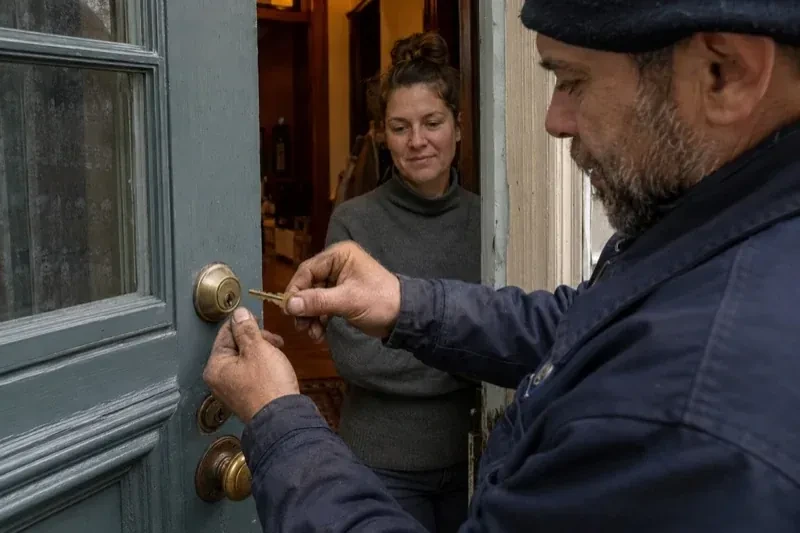
- The renovation wrapped up in the spring. The crew was good, the kitchen looks right, and the key you handed the foreman on day one was never handed back. Nobody kept track of who on the crew carried it.
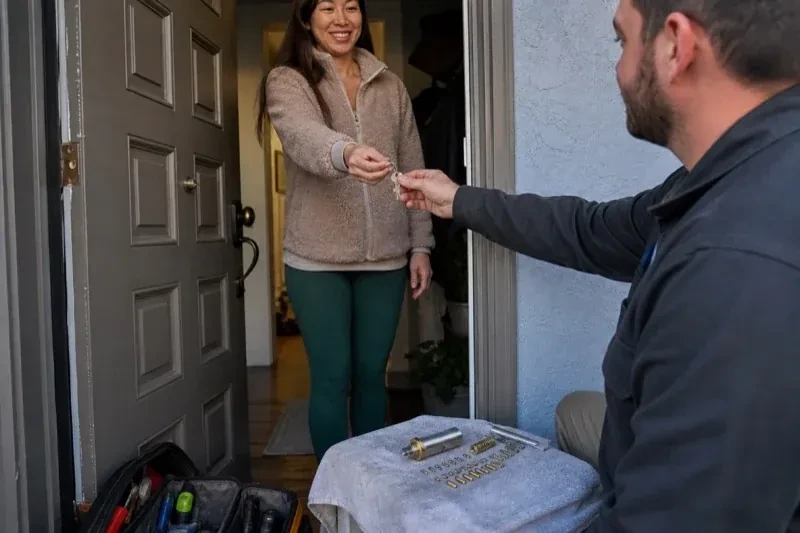
Your purse was taken from the back of a chair at a restaurant. The cards can be cancelled by phone tonight, but the house keys were in the side pocket beside a driver's licence that shows exactly where those keys fit.
The first useful move after losing a key is to think about where it worked rather than where it went. A house key commonly opens more than the front door: the back door, a side entrance, the door from the garage into the house, a shed, a gate padlock, sometimes a storage room or a mailbox. A same-visit rekey starts by listing those openings, then treats the ones that are yours to change and points you to the right person for the ones that belong to a landlord, a condominium or the postal service. Every cylinder on the list leaves the visit taking a new key.
Sound familiar?Toronto
Lost Keys — Same-Visit Rekey · Toronto
Scene 1
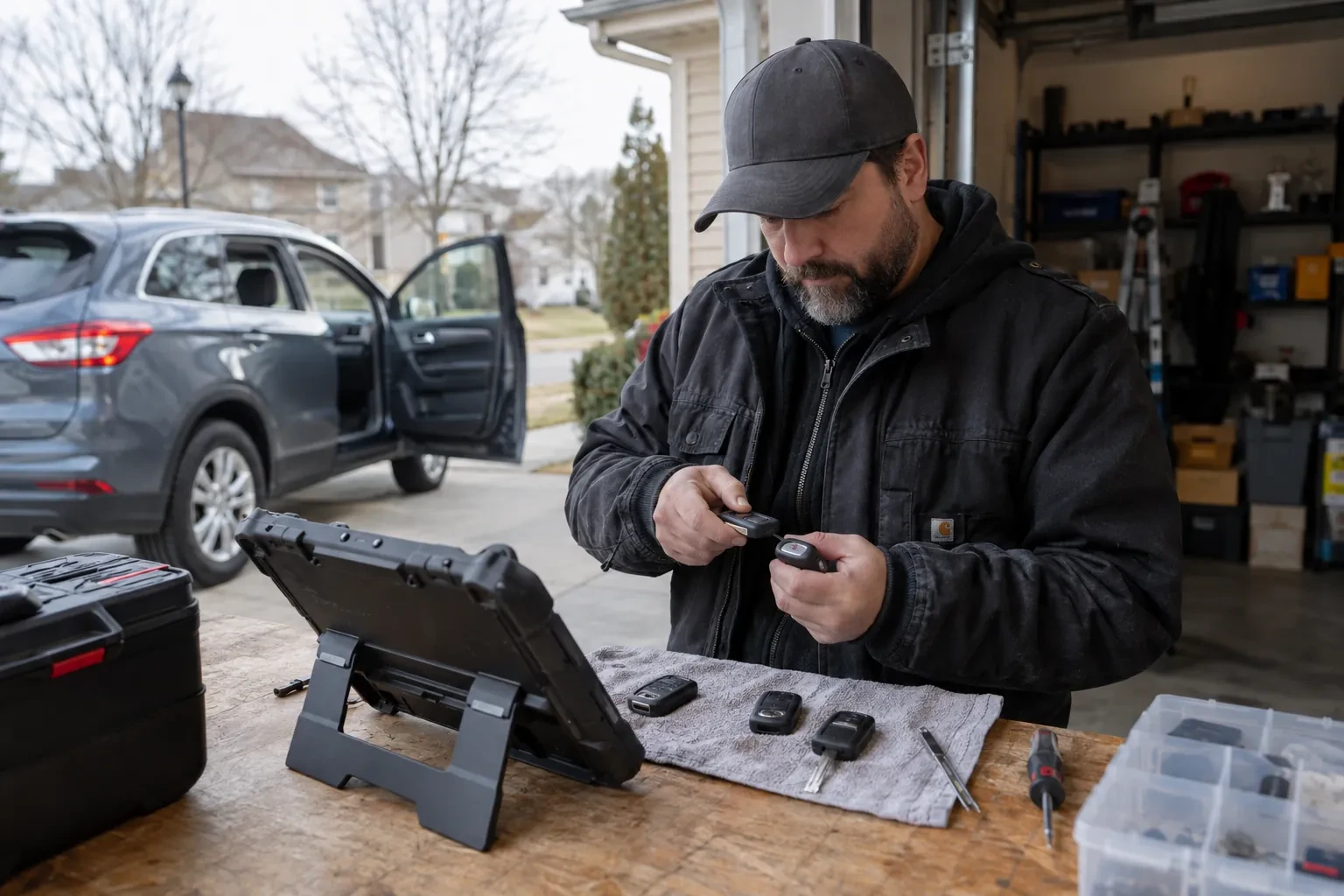
With the cylinders read, the locksmith can say whether the whole property can live on one key. Cylinders from the same keyway family accept the same blank, so they can be pinned to the same combination. Where the front door is one family and the garage entry another, the choice is to keep two keys or swap one cylinder for a compatible one during the visit. Five-pin and six-pin cylinders, and homeowner-rekeyable types, each have their own limits on what they can be matched to. A minute of comparing keyways before the work begins is what makes a single ring possible afterwards rather than a near miss.
Scene 2
The last part of the work is deliberate repetition. Each new key is tried in each cylinder it should open, with the door open and again with it closed and bolted, so a pin that feels fine on the bench is proven on the door. The old key is tried too and shown turning nothing. Cylinders that were dry or gritty get the lubricant their maker specifies, a puff of graphite, PTFE or a specified liquid product, and a few cycles to spread it. Screws are checked snug, covers seated, and the pile of old keys and any swapped cylinders is handed to you or taken away as you prefer. Only then is the key count confirmed and written down.
Scene 3
You leave with a set of keys whose count you agreed and can name: one each for the adults, one for the neighbour, one in the lockbox. That is the count of authorised keys, not proof against every copy unless the key system also controls its blanks. A small habit keeps it honest: when a key goes to a contractor, a cleaner or a house sitter, note it and get it back, or rekey when the arrangement ends. From today the answer is a figure you wrote down, not a guess about who might still hold something from years ago.
What shapes the quoteAgincourt Locksmith Pros
FeesSame any hour
It is good practice whenever a key has been out of your hands for a while and you are not certain it came back. Contractors, cleaners, sitters and short-term guests all have honest reasons to hold a key, and most return it, but a rekey at the end of the arrangement is what turns 'probably' into certainty. Some households make it a habit at the close of every project.
Your suite door is generally the one you can act on, and it may sit on a building master system, so the locksmith plans the rekey so the master still operates while the old change key stops working. Lobby doors, the parking gate, amenity rooms and the mailroom belong to the corporation; report a lost fob or key for those to the property manager, who deactivates or reissues it. The locksmith can help sort which is which.
Walk the property and note every door the missing key opened, including the garage, shed and gate. Gather any keys you still have, since a working key helps in reading each cylinder. Have identification and, for tenants, something showing the tenancy. Decide roughly how many keys you want and whether you would like all doors on one key. If a garage remote or building fob was lost too, mention it when you book.
TorontoOntario
Lost Keys — Same-Visit Rekey · Agincourt, Agincourt North, Clarks Corners, Sullivan, Tam O'Shanter
Every square is one home in a hundred.
On-site assessment
Your purse was taken from the back of a chair at a restaurant.
(289) 806-4250, open 24/7.
On-site assessment preferred · (289) 806-4250, open 24/7