Skip to content
AgincourtLocksmith ProsOpen 24/7 (289) 806-4250
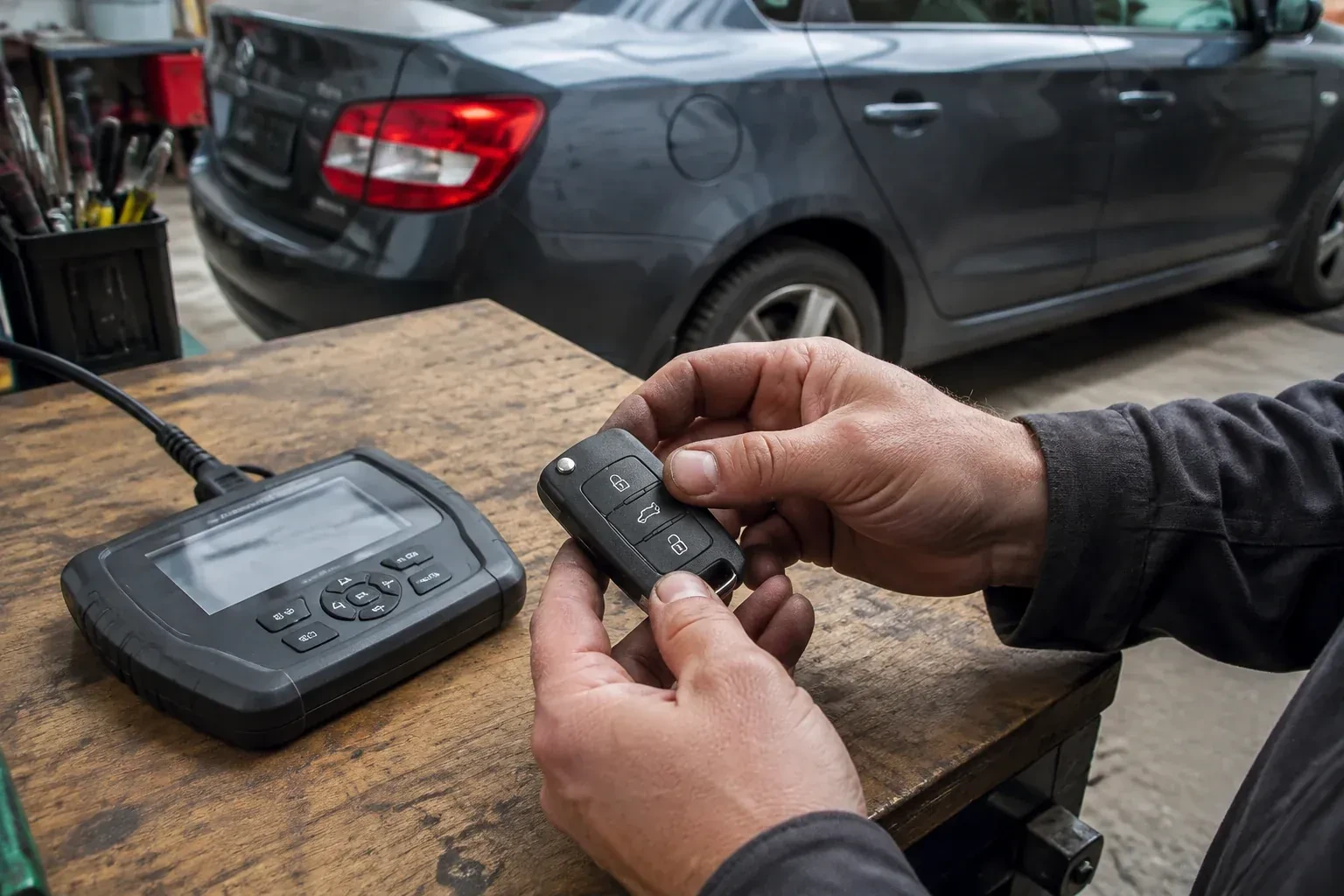
Hands holding a black car key fob above a workbench, beside a wired handheld device with a screen. — Car Key Replacement, Toronto

Car keys · Toronto

Car Key Replacement

You bought the car privately and it came with a single key on a shoelace. Every time it leaves your hand you notice, and you would like a second one made before the first goes missing.

In plain words

There are two starting points, and the first question on the phone is which one you are in. If any working key exists, the job is to add a key: cut, then registered alongside it, often a short procedure. If every key is gone, the locksmith starts from what the vehicle supports: on many cars, the door lock is decoded to produce a blade and the immobilizer is reset to erase the missing keys before new ones are stored, while a key-card, phone-key or dealer-only vehicle follows its own route. Both end with a working key, but the second takes more steps, which is why a spare is worth having.

Sound familiar?Toronto

The call
The fob went through the washing machine in a jacket pocket. It came out clean and completely silent. Nothing unlocks, the push-button start ignores it, and the little metal blade hidden inside only opens the driver's door.
NextHow the visit goes

Car Key Replacement · Toronto

How the visit goes

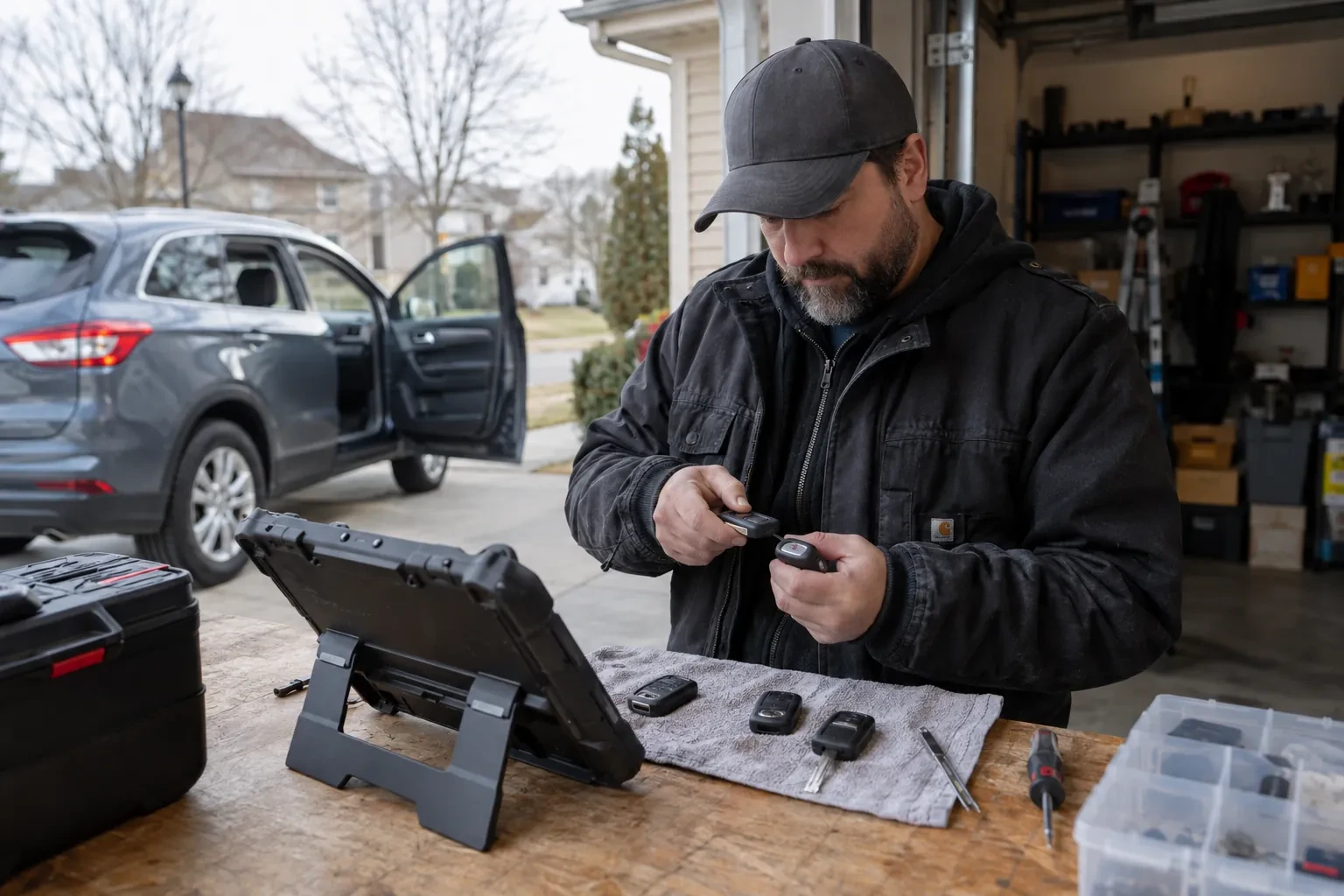
Technician holding two key fobs at a bench with a tablet and three fobs on a gray cloth, an open SUV behind.
  1. Scene 1

    What is left of the old key

    A damaged key is examined before anything is ordered, because its parts may be reusable. A cracked shell often still holds a healthy circuit board and transponder; those can move into a new case with a freshly cut blade, and no programming is needed. A snapped blade with an intact head keeps its chip and remote. A key that went through the wash may have lost the remote but kept the chip, since the transponder has no battery of its own. Sorting this out with a battery test and a chip reader decides whether you need a shell, a blade, a remote, or a complete new key.

  2. Scene 2

    Decoding the door lock when there is no code

    When the code is unavailable, the lock itself becomes the source. The locksmith works a decoding pick into the driver's door cylinder, feels each wafer to its set position and reads off the depth, producing a full cut sequence without removing the lock from the door. The blank is then cut to that reading and tried in the door and the ignition. On cars where the ignition carries an extra wafer the door lacks, the last position is found by trying the small number of possible depths. This is careful, patient work that leaves the door lock exactly as it was.

  3. Scene 3

    Keys that work every lock on the car

    You leave with keys that have been tried, not merely programmed. Each one has opened the doors, turned or woken the ignition, started the engine and worked every button it carries, and you have watched it happen. If the car has a mechanical lock that was stiff, it has been freed and lubricated so the blade is a genuine backup. Should the old key have been rebuilt around its original electronics, it has been through the same checks as a brand-new one. The point of the routine is simple: the next time you reach for the key, there is nothing to wonder about.

In the van

  • Transponder chip
  • Vehicle battery maintainer
  • Proximity fob with emergency blade
  • Decoding pick and lock reader
  • Laser-style milling cutter

What shapes the quoteAgincourt Locksmith Pros

Condition of the locks and ignition
A door cylinder seized with salt or an ignition with worn wafers may need freeing, servicing or rebuilding for the new key to feel right. That work is quoted as its own item alongside the key.
Functions on the fob
Locking and unlocking come with every fob. Trunk release, panic, remote start and power liftgate depend on the fob part number, so a fob with more functions is quoted differently from a basic one. Phone-as-a-key is quoted separately, set up through the vehicle's own software rather than by fob choice.
One working key or none
A spare added beside a working key is a shorter routine. Starting from nothing means working through whatever that vehicle's own all-keys-lost procedure calls for, commonly opening the car, decoding the lock and resetting the immobilizer, and the quote reflects those extra stages.

FeesSame any hour

Have it ready

Before you call · 0 / 3

(289) 806-4250

Straight answers

What is the difference between adding a spare and replacing all keys?

Adding a spare uses an existing working key as the reference: the new blade is cut and checked against it, and the immobilizer is asked to accept one more key alongside the old. Replacing all keys starts with nothing: the lock is decoded for a blade, and the immobilizer is reset to forget every previous key before new ones are stored. The second job is longer and sometimes needs manufacturer data, one more reason to keep a spare.

Can you make a key if every key to the car is gone?

Often, yes, for vehicles with a supported conventional key system: the car is opened, a blade is produced by decoding the door lock or retrieving the factory key code, and the immobilizer is reset so the missing keys are erased before new ones are stored. A key-card or phone-key vehicle, or one needing a dealer procedure, follows its own route instead, which is why the VIN is asked for on the first call.

Which documents count as proof of ownership?

Government photo identification plus the vehicle permit issued by ServiceOntario, the green ownership showing the VIN, is the usual pair. An insurance slip or a lease agreement in your name also works. For a company vehicle, a work order or letter from the fleet manager naming the VIN covers it. If you bought the car days ago, bring the bill of sale and the signed permit until the transfer is done.

Torontoinformation

TorontoOntario

Town
Toronto
In business
35 years
Hours
Open 24/7
Nights, weekends and holidays, same fees
Visits
On-site assessment preferred. Request a visit or call.

2021 census: what it means at the door

Every square is one home in a hundred.

  • 58 in 100 homes · older homes
  • About 58% of homes in Toronto were built in 1980 or earlier, according to the 2021 Census.Where most homes were built decades ago, doors often still carry their original mortise locks and brass knobs. That hardware can usually be cleaned, re-sprung and kept in service, with a modern deadbolt added above it for strength without losing the look.
  • Single-detached houses make up about 23% of homes in Toronto (2021 Census).In a building, a lockout happens in a hallway rather than a porch, and the neighbours notice. A locksmith confirms you belong to the suite, opens the door with the least fuss the lock allows, and leaves the door and cylinder intact for the night.

Source: Statistics Canada, Census Profile

Open Toronto in Google Maps

On-site assessment

Request a visit.

You bought the car privately and it came with a single key on a shoelace.

(289) 806-4250, open 24/7.