Sound familiar?Toronto
- The call
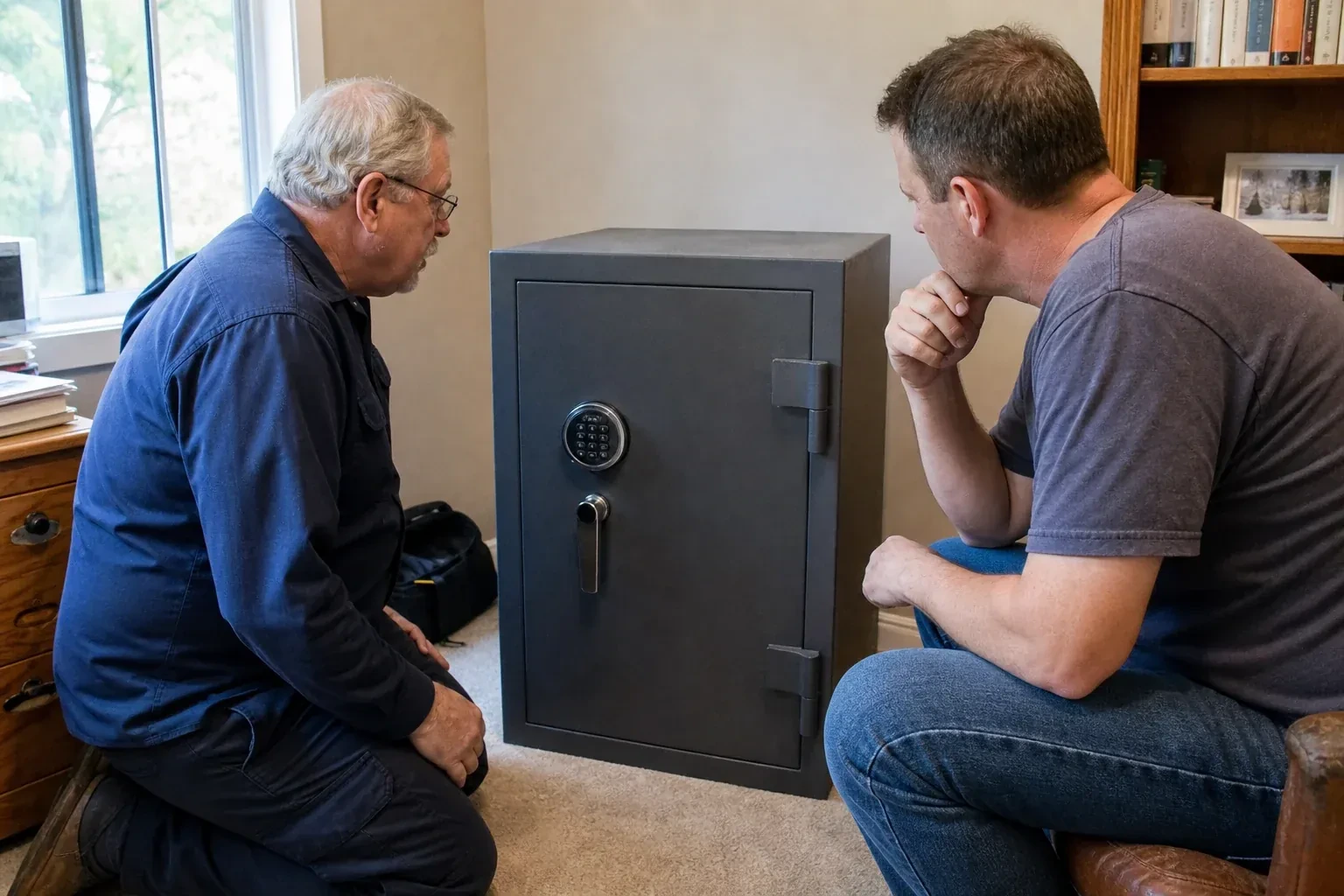
- A community group counts the weekend's raffle and bake-sale cash on a kitchen table, then carries it home in a tote bag until the bank opens Monday, because there has never been anywhere safer to leave it.
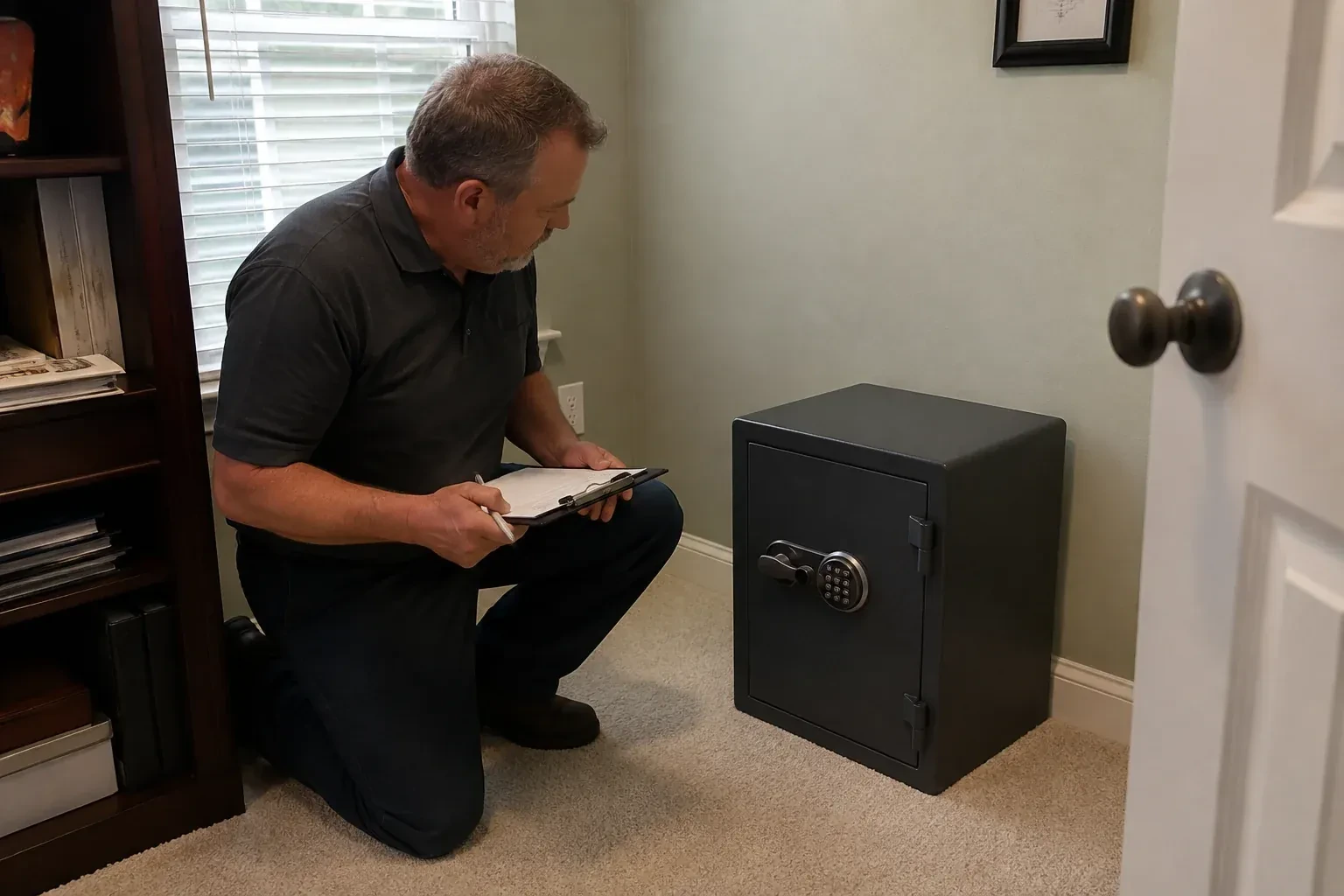
Behind the filing cabinets sits a heavy floor safe nobody ever bolted down, left exactly as the last owner set it. It opens fine, but a determined pair of hands could simply tip it into a van.
A safe carries two separate report cards, and neither one predicts the other. Some burglary ratings describe how long a determined attempt with tools takes to force the door, timed by an independent lab; others are construction classifications based on steel thickness rather than a timed attack. A fire rating describes how hot the interior gets in a timed furnace test, and it matters for paper and for cash, though burglary resistance is usually the bigger concern where cash is involved. Choosing between them, or finding a unit built to both standards, is the first real decision in an installation, and it depends on what will sit inside the safe.
Sound familiar?Toronto
Safe Installation & Servicing · Toronto
Scene 1
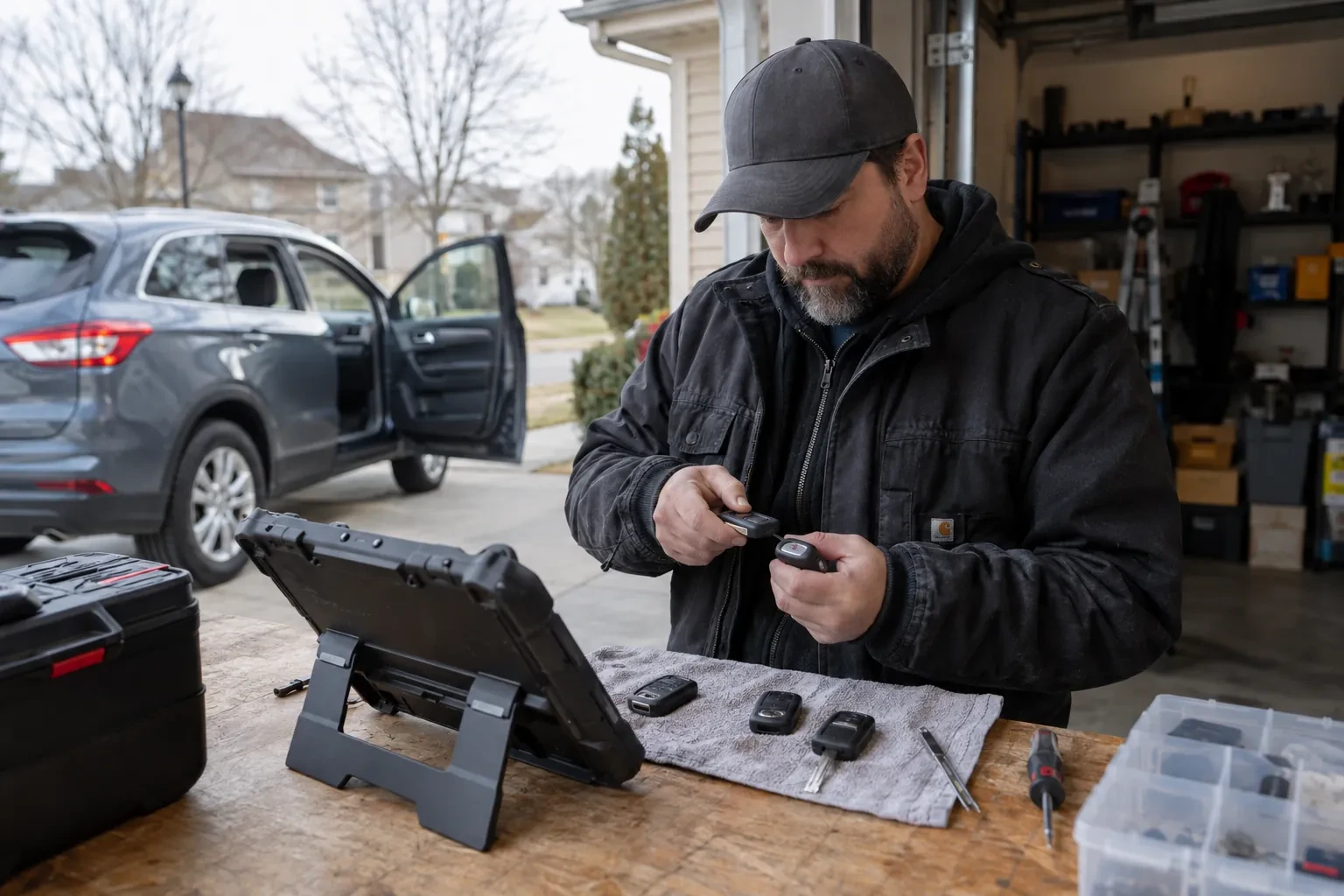
Before any hardware is chosen, the locksmith asks what will actually sit inside: cash from a till, jewelry, firearms, paper contracts, backup drives, or some mix of all of it. Each of those has a different enemy. Cash and jewelry are mainly at risk from tools and time, so a burglary rating matters most. Paper is mainly at risk from heat, so a fire rating matters most, and digital media needs a much lower internal temperature than paper to survive the same fire. Answering this question first is what keeps the rest of the visit from guessing.
Scene 2
On a concrete floor, holes are drilled through the safe's pre-cut anchor points with a hammer drill and a masonry bit sized to the anchor hardware, and the dust is cleared from each hole so the anchor seats fully rather than on loose grit. Concrete anchor bolts are driven in and torqued to the hardware manufacturer's specification, tight enough to resist prying but not so tight that the anchor or the safe's own steel is stressed. The safe is tested afterward by hand to confirm it does not rock or shift.
Scene 3
By the end of the visit, the safe sits level, anchored to the floor or wall with hardware matched to that surface, and tested by hand to confirm it does not rock, tip, or shift. Anyone trying to remove it would need to defeat the anchoring itself rather than simply lifting the unit and carrying it elsewhere. The owner is shown exactly where the anchor points are and told what was used, in case a future move or renovation needs to account for them.
What shapes the quoteAgincourt Locksmith Pros
FeesSame any hour
A fire-rated interior works by sealing tightly, and that same seal traps ordinary household humidity over time with nowhere to go. Opening the door for a few hours every few weeks lets trapped air exchange with the room, and a desiccant packet inside absorbs moisture between those openings if it is refreshed on schedule. A musty smell or a soft-feeling document is the interior telling you it needs airing out.
Knowing roughly what the safe will store, whether it is a new purchase or an existing unit, and what floor or wall it will sit against covers most of what shapes the visit. If the safe is already on site, its approximate weight and dimensions help too, along with whether it currently has a working lock and combination. An insurer's stated rating requirement, if there is one, is worth mentioning as well.
It depends entirely on the unit's size and construction, since the steel body itself usually weighs far more than whatever ends up inside it. A small document safe and a large commercial unit sit at very different points on that scale. Confirming the safe's own weight before delivery, and checking it against the floor it will sit on, is part of the assessment rather than something guessed at on arrival.
TorontoOntario
Safe Installation & Servicing · Agincourt, Agincourt North, Clarks Corners, Sullivan, Tam O'Shanter
Every square is one home in a hundred.
On-site assessment
Behind the filing cabinets sits a heavy floor safe nobody ever bolted down, left exactly as the last owner set it.
(289) 806-4250, open 24/7.
On-site assessment preferred · (289) 806-4250, open 24/7