Skip to content
AgincourtLocksmith ProsOpen 24/7 (289) 806-4250
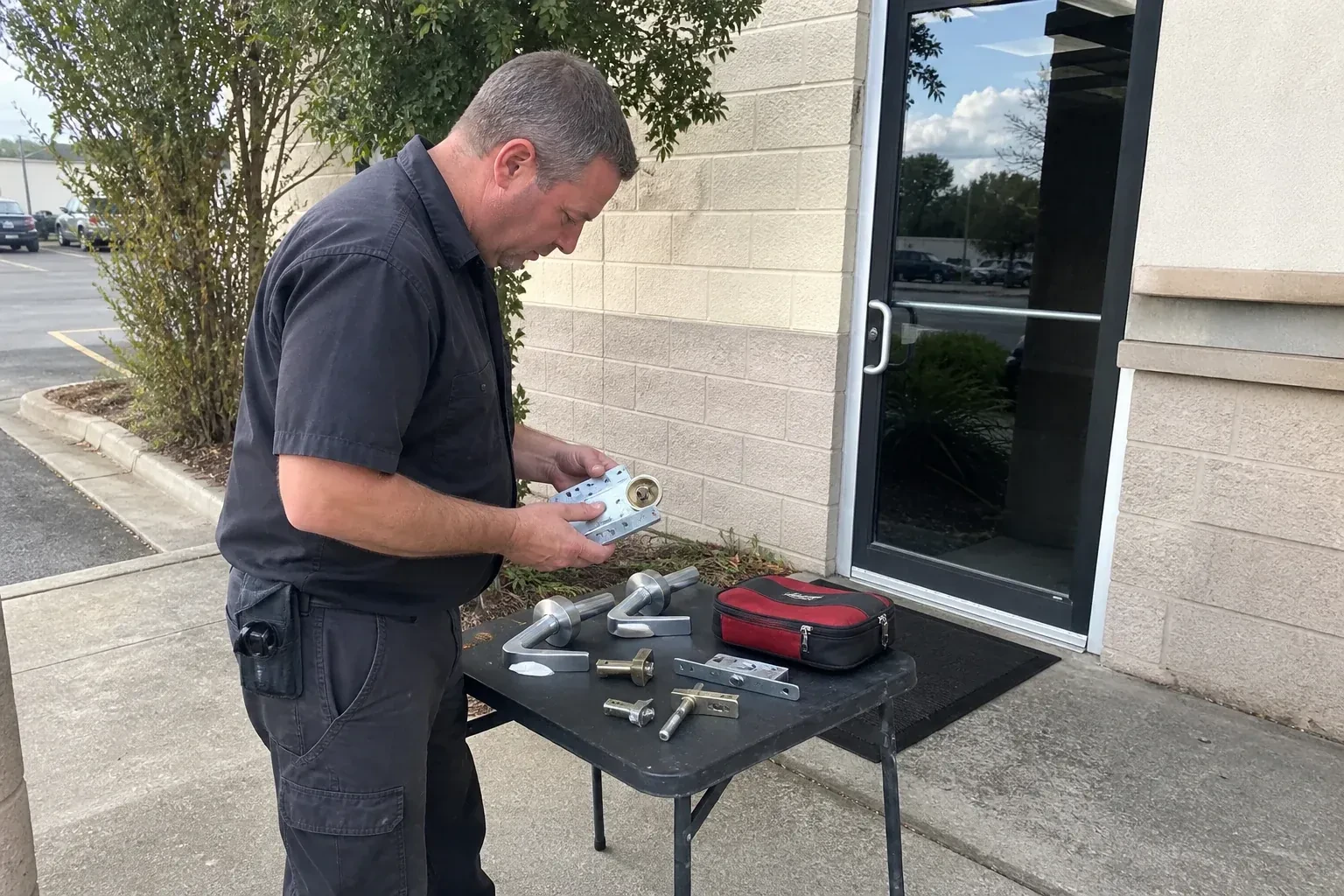
Technician examining detached commercial lock hardware on a table outside a shop entrance. — Business Lockout Service, Toronto

Lockouts · Toronto

Business Lockout Service

Minus eighteen with a wind, and the exterior cylinder on the shop door has frozen solid overnight after yesterday's slush. The key goes in halfway and stops.

In plain words

On a commercial door the lock is rarely alone. A door contact feeds the alarm panel, a card reader drives an electric strike or a magnetic lock, and a monitoring company is watching for an opening outside business hours. A business lockout therefore starts with a conversation about those systems: who can disarm the alarm, whether the monitoring station should be told to expect an entry, and whether the electrified hardware has a mechanical override. Handling that first means the door opens without a patrol being dispatched, the access system is left working as designed, and the reader can be reset once someone is inside.

Sound familiar?Toronto

The call
The heavy glass door has been scraping the threshold for weeks. This morning the key turns, you can hear the bolt trying to move, but it is jammed hard in the strike and the door stays shut no matter how the handle is pulled.
NextHow the visit goes

Business Lockout Service · Toronto

How the visit goes

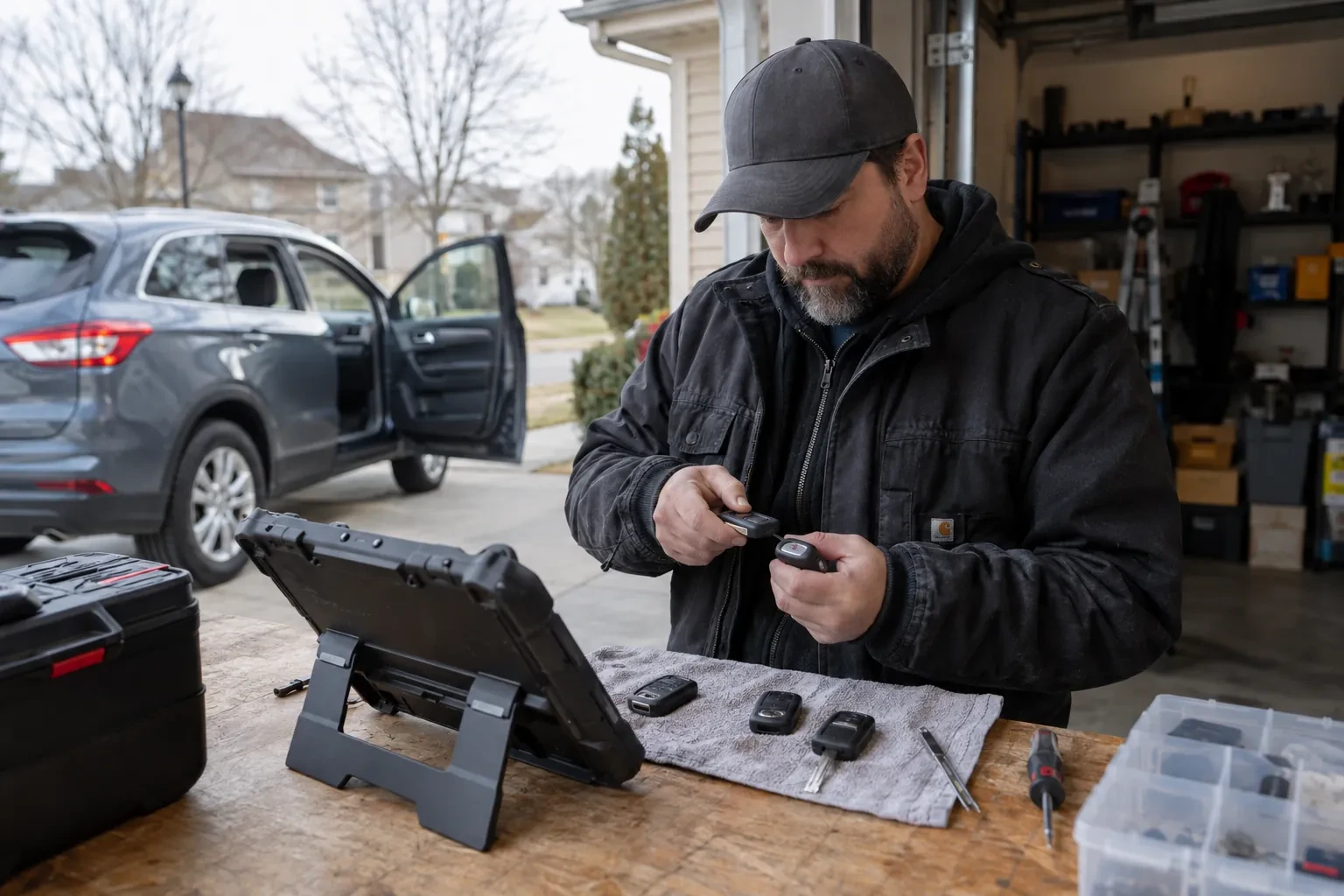
Technician holding two key fobs at a bench with a tablet and three fobs on a gray cloth, an open SUV behind.
  1. Scene 1

    Weather, salt and wear on an exposed lock

    A storefront cylinder lives a hard life: sidewalk salt, slush, rain and a thousand key turns a month. In winter the locksmith checks for frost on the cylinder face, tests how far the key seats, and judges whether cold grease or real ice is holding the plug. In any season the keyway is inspected for grit and a worn key is compared with a fresh one, since a copy of a copy stops lifting the pins cleanly long before it breaks. This tells the locksmith whether a patient thaw, a cleaning and dry lubricant, or a new cylinder is the right response, and what to leave behind so the same morning is not repeated.

  2. Scene 2

    Doors with a push bar inside

    A rear door fitted with an exit device is opened from outside through its trim: a keyed lever, a pull with a cylinder, or a bare cylinder in a nightlatch function. Depending on that trim, picking or decoding the cylinder either retracts the latch directly, the way a nightlatch trim does, or unlocks a lever, knob or thumbpiece that then has to be turned to let the latch go. The device itself, including any vertical rods and the dogging mechanism, is left exactly as installed, because it is the way out in an emergency. Afterwards the bar is pressed from inside to confirm the latch releases with one push, and the outside trim is checked for a loose cylinder.

  3. Scene 3

    Ready for the rest of the winter

    A storefront cylinder that froze is handed back dried, cleaned of salt and dressed with a dry lubricant that sheds moisture instead of trapping it. A tube of lock de-icer for the opening manager's coat pocket and a keyhole cover on the most exposed door are small habits that carry a business through a season of freeze and thaw. The closer is adjusted for cold weather so the door still latches when the fluid thickens, and the threshold is checked for the ice ridge that forms where slush is tracked in. If the same door freezes every year, a weather-shielded cylinder or a small vestibule heater is worth a conversation.

In the van

  • Exit device trim cylinders and dogging keys
  • Storefront deadlatch and hookbolt bypass tools
  • Lock de-icer and dry PTFE lubricant
  • Commercial pick and tension tools
  • Storefront deadlock and deadlatch bodies

What shapes the quoteAgincourt Locksmith Pros

When the call comes in
A weekday morning, an evening after closing, a weekend or a statutory holiday all cost the same amount for a business lockout, and locksmiths are reachable at any hour. The figure is confirmed at the door once the locksmith has looked at the door and the hardware involved.
Access control and alarm coordination
Restoring power to a strike, opening an override cylinder, re-enrolling fobs and waiting for an alarm station or access provider to respond are each small tasks the quote names separately.
Upgrades you choose while the locksmith is there
Some businesses use the visit to move to a heavier storefront deadlock, a restricted keyway, interchangeable cores, a lockbox for keyholders or a reinforced strike. None of it is needed to get you open; each is priced as its own option.

FeesSame any hour

Have it ready

Before you call · 0 / 3

(289) 806-4250

Straight answers

We need to open for customers. How do you sequence the visit?

Entry comes first and repairs second. Once authority is confirmed the door is opened, staff go in and start their routine, and the locksmith turns to the cause: extracting a broken key, rekeying for a lost one, re-springing a deadlatch or lifting a dropped door. Anything that can wait for a quieter hour, such as rekeying interior doors, is offered as a return visit so the shop floor is not blocked while it trades.

Will we get something in writing afterwards?

Yes. The visit closes with a written account of which door was opened and how, the condition the hardware was in, anything replaced, the number of keys cut and who received them. Landlords ask for it when locks on a unit change, insurers after a loss, and franchise head offices as a matter of course. Keep it with the lease; it also tells the next locksmith exactly what is on your doors.

What should I have ready when I call?

The address and unit number, which door you are outside, what the lock looks like, and where the keys are: with someone, lost, broken or simply refusing. Say whether there is an alarm or a card reader on the door, who can disarm or confirm your authority, and whether the building has a property manager. If you can send a photo of the lock and the door edge, the right cylinders and cores come on the first trip.

Torontoinformation

TorontoOntario

Town
Toronto
In business
35 years
Hours
Open 24/7
Nights, weekends and holidays, same fees
Visits
On-site assessment preferred. Request a visit or call.

2021 census: what it means at the door

Every square is one home in a hundred.

  • 58 in 100 homes · older homes
  • About 58% of homes in Toronto were built in 1980 or earlier, according to the 2021 Census.Where most homes were built decades ago, doors often still carry their original mortise locks and brass knobs. That hardware can usually be cleaned, re-sprung and kept in service, with a modern deadbolt added above it for strength without losing the look.
  • Single-detached houses make up about 23% of homes in Toronto (2021 Census).In a building, a lockout happens in a hallway rather than a porch, and the neighbours notice. A locksmith confirms you belong to the suite, opens the door with the least fuss the lock allows, and leaves the door and cylinder intact for the night.

Source: Statistics Canada, Census Profile

Open Toronto in Google Maps

On-site assessment

Request a visit.

Minus eighteen with a wind, and the exterior cylinder on the shop door has frozen solid overnight after yesterday's slush.

(289) 806-4250, open 24/7.