Sound familiar?Toronto
- The call
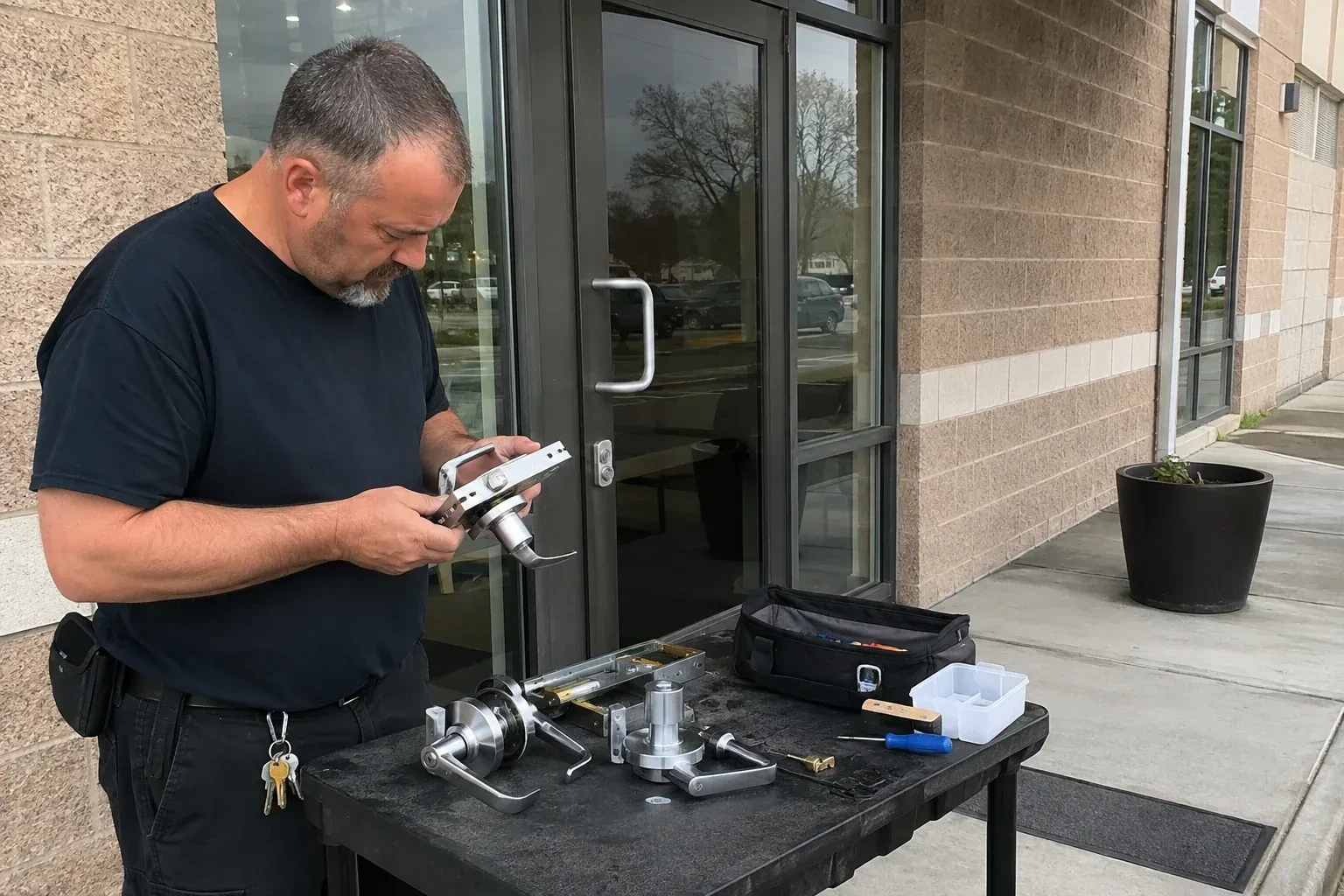
- Overnight someone forced the back door, and the cylinder face is scarred, the metal around the strike has pulled loose from the frame, and the latch no longer sits flush.
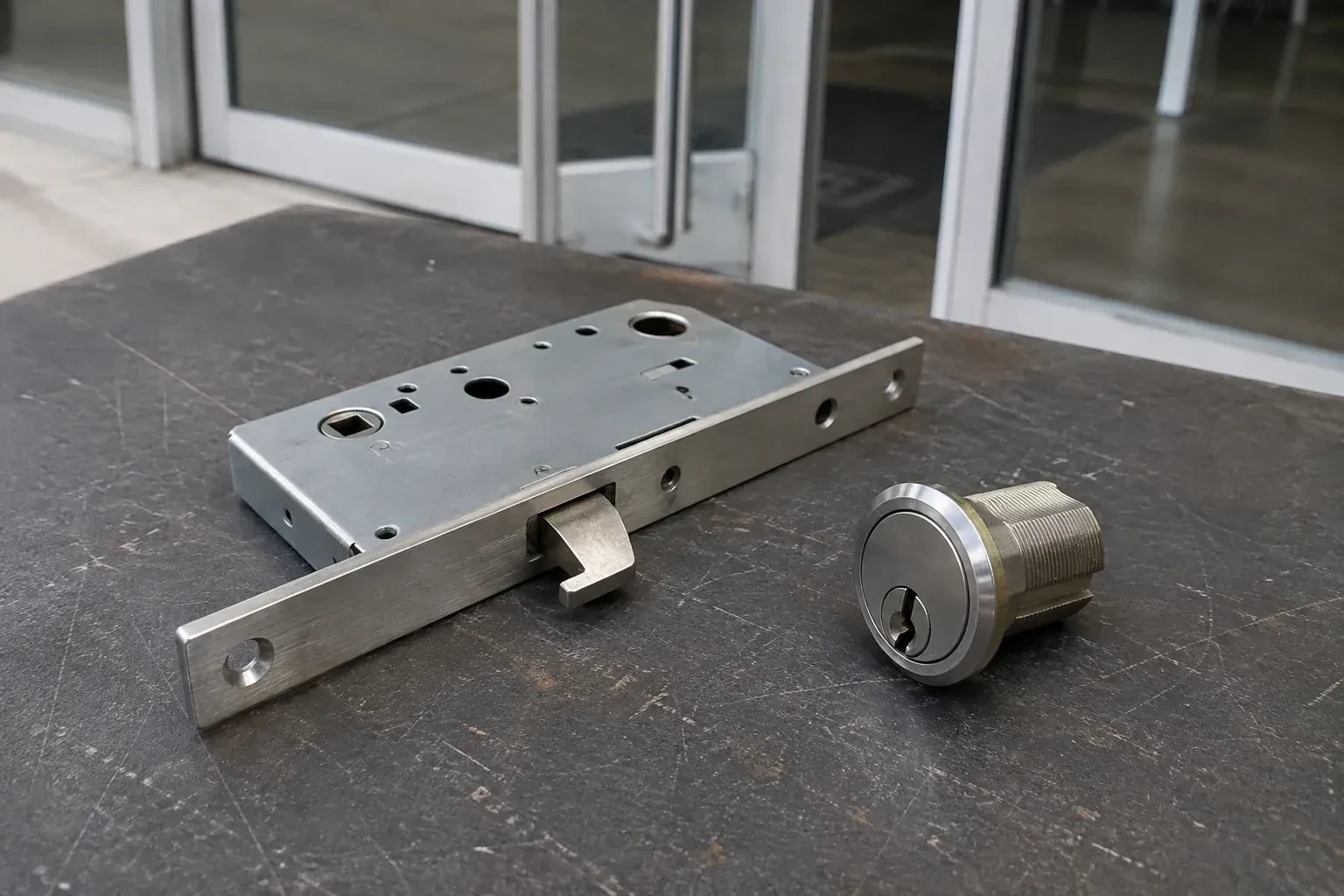
At closing time the hookbolt on the storefront door catches the keeper only on the second or third try, and one employee has started giving the door a shoulder to force it home.
Fire separations and exit routes add a layer that a house entry door never has, and this service is where that layer gets handled properly. A door that forms part of a fire separation needs hardware listed for that door's rating, and a door on a required exit may need to open with a single motion and no key once the building's occupant load crosses a threshold. The locksmith checks whether either condition applies to this specific opening, selects hardware that satisfies it, and installs the new lock so the door still closes and latches the way a fire-rated or exit door is required to.
Sound familiar?Toronto
Commercial-Grade Lock Replacement · Toronto
Scene 1
The last part of the assessment looks past today's problem to how the business expects to manage this door going forward: does staff turnover happen often enough that an interchangeable core, which lets a key holder change the combination without pulling the whole cylinder, would pay for itself in convenience? Does the business want a restricted keyway so blanks cannot be cut at an ordinary hardware counter? These questions shape the specific hardware ordered as much as the door's physical construction does.
Scene 2
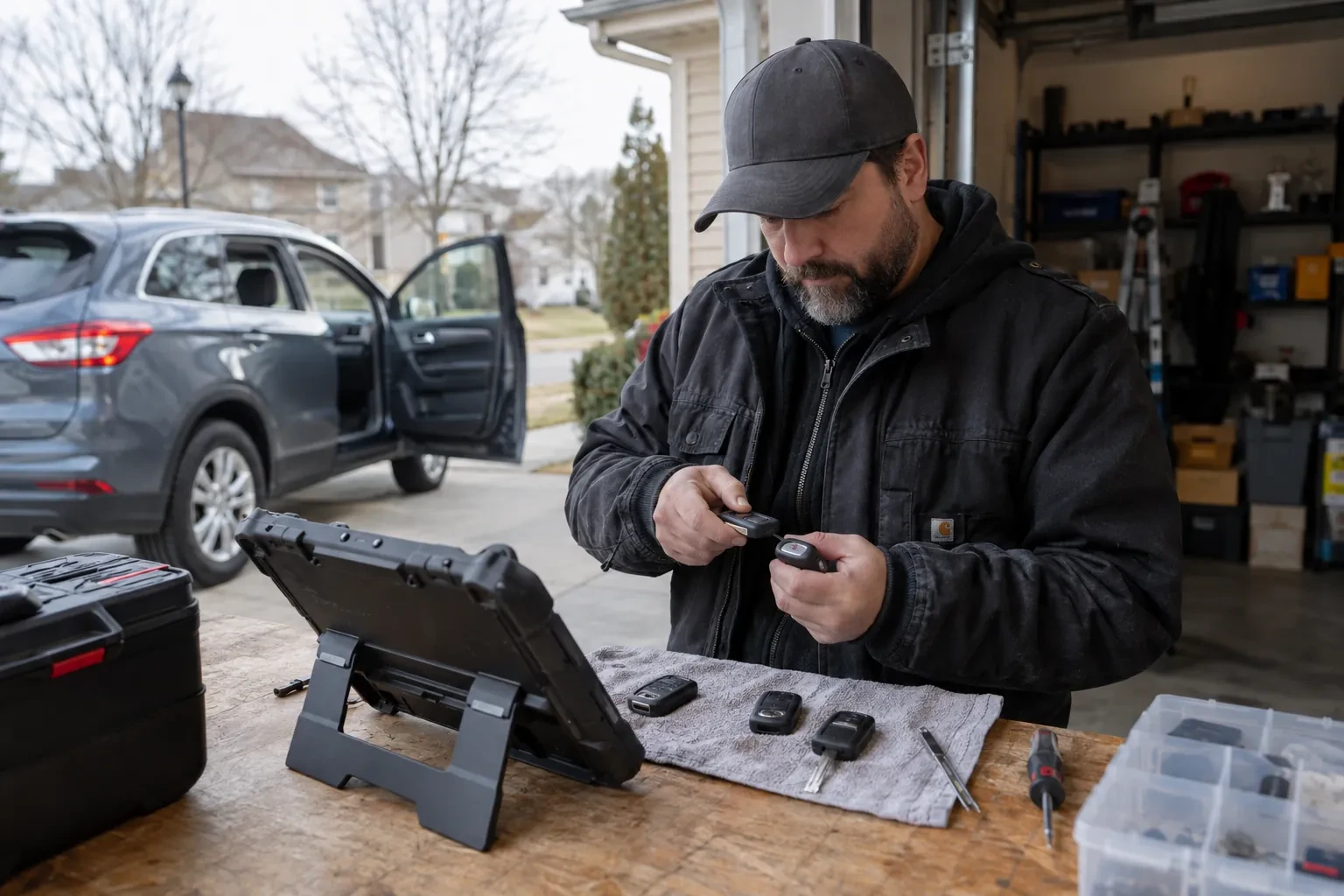
The cylinder installed is the one agreed during the assessment: keyed into an existing master or grand-master system, set up as a new interchangeable core the business can rekey itself later, or cut to a restricted keyway that limits who can order duplicate keys. Where several doors are being brought onto one system in the same visit, cylinders are combinated so a single key or a defined set of keys operates every door that is supposed to share access.
Scene 3
Where the door forms part of a fire separation or a required exit route, the new hardware is listed for that use and the door has been tested to confirm it still closes and latches on its own. Any push-type release hardware installed to meet an occupant-load threshold has been checked across the whole route it serves, not just at the one door where the call started. The business leaves with an opening that satisfies the condition that triggered the work, rather than a lock that merely looks similar to what was there before.
What shapes the quoteAgincourt Locksmith Pros
FeesSame any hour
That is a decision for the business, not the locksmith, but the general practice is to limit master keys to the smallest number of people who genuinely need building-wide access, and to log who holds each one. Sub-master and change keys can then cover departments, shifts or single doors without every key holder carrying access to everything.
It helps to know roughly what is on the door now, knob, deadbolt, exit device or something else, whether other doors on the property share a key with it, and who in the business can authorize the work and sign off on keys. Photos of the current hardware and any fire label on the door are useful if you can get them ahead of time.
Yes, that is usually the first decision made. The locksmith checks whether your doors already run on a master or grand-master system, an interchangeable-core setup, or a restricted keyway, and orders replacement cylinders that slot into whichever structure you want to keep or move to. Bringing a new door onto an existing system is generally simpler than starting that door on its own.
TorontoOntario
Commercial-Grade Lock Replacement · Agincourt, Agincourt North, Clarks Corners, Sullivan, Tam O'Shanter
Every square is one home in a hundred.
On-site assessment
At closing time the hookbolt on the storefront door catches the keeper only on the second or third try, and one employee has started giving the door a shoulder to force it home.
(289) 806-4250, open 24/7.
On-site assessment preferred · (289) 806-4250, open 24/7