Skip to content
AgincourtLocksmith ProsOpen 24/7 (289) 806-4250
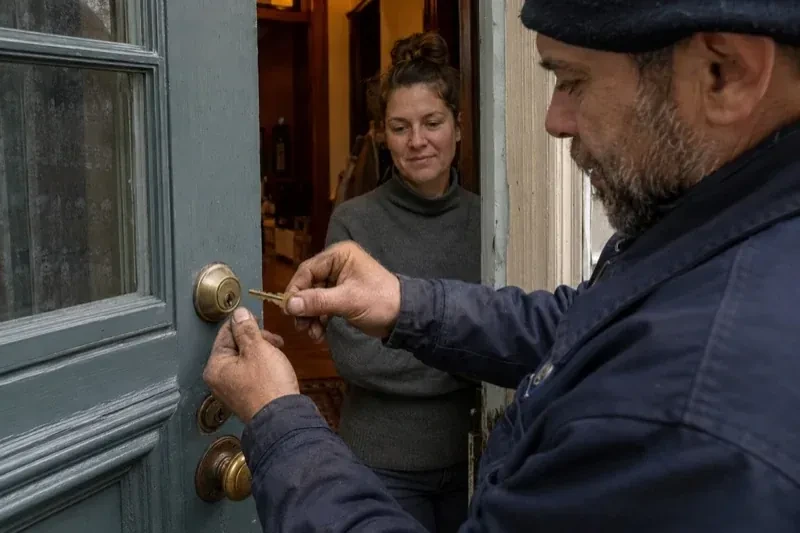
Person holding a key beside a brass-colored deadbolt on an open painted door while another person watches from inside. — Home Lockout Service, Toronto

Lockouts · Toronto

Home Lockout Service

The moving truck has left, half the boxes are inside, and the single key the previous owner handed over turns the knob but not the deadbolt. Someone locked it on the way out, and nobody has a key that fits it.

In plain words

Different locks call for different openings, and a lockout visit starts by reading the hardware on your door. A spring latch in a knob or lever behaves differently from a deadbolt, a mortise lock in an older home has its own internals, and a high-security cylinder resists shortcuts that work on builder-grade hardware. A smart lock adds batteries and, on many models, a hidden keyed override, though some key-free designs rely instead on their own backup power, codes or app access. Knowing which is in front of them lets the locksmith pick, decode or bypass the mechanism, keeping the lock intact rather than reaching for a drill.

Sound familiar?Toronto

The call
Someone pushed the privacy button on the bathroom door and pulled it shut behind them, leaving the room locked and empty. The little emergency slot on the outside is stripped, and the tiny release key that came with the handle disappeared years ago.
NextHow the visit goes

Home Lockout Service · Toronto

How the visit goes

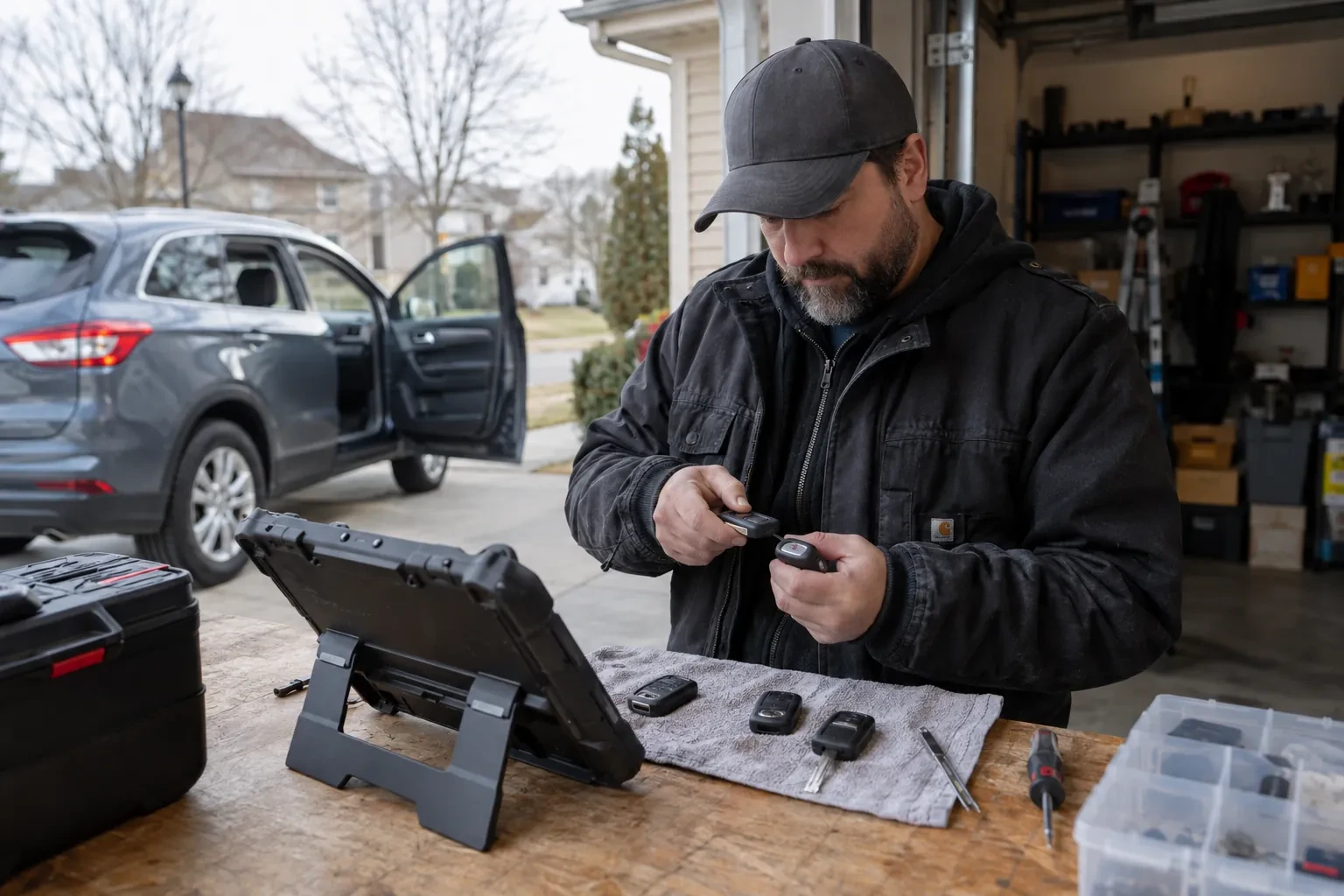
Technician holding two key fobs at a bench with a tablet and three fobs on a gray cloth, an open SUV behind.
  1. Scene 1

    Is it the lock or the door?

    A surprising number of lockouts are really door problems. The locksmith checks how the door sits in its frame: whether it has dropped on tired hinges, swollen with summer humidity, or shrunk in dry winter air so that the bolt no longer lines up with its pocket in the strike plate. A hand on the door while the key is turned often reveals the bolt binding against the strike rather than a failed cylinder. Sorting this out first matters because a door that is pinched in its frame needs pressure relieved, not a lock picked, and the fix afterwards is a strike adjustment or a hinge screw rather than new hardware.

  2. Scene 2

    Least invasive first, always

    The opening follows a ladder. At the bottom rung are methods that operate the lock exactly as a key would: single-pin picking, raking or decoding the cylinder so the plug turns and the bolt withdraws. Next come bypasses that work around the cylinder, slipping a spring latch or reaching the inside thumb-turn with a purpose-made tool. Only when the hardware defeats all of those does drilling come into the conversation, and it is a conversation, not a surprise. Working up this ladder means the lock is intact in the great majority of cases and you close the door behind the locksmith with the same hardware you had that morning.

  3. Scene 3

    The missing key is now just a piece of metal

    If the cylinder was rekeyed, whoever has the old key is holding something that fits the keyway and turns nothing. You receive the new keys, typically two or three, cut from the fresh pin combination rather than copied from a worn original, so they will operate crisply for years. It is worth counting them, deciding who in the household gets one, and writing down where the spare lives. If several doors were brought onto the same new key, test each one before the locksmith drives off. From this point the lost key is a story to tell, not a worry to carry.

In the van

  • Plug follower and repinning kit
  • Cylinder decoder
  • Strike plate and long hinge screws
  • Key blanks and key cutter
  • Broken key extractors

What shapes the quoteAgincourt Locksmith Pros

Interior door or exterior door
A bathroom privacy lock or a bedroom door is generally a lighter job than an exterior deadbolt, and an old keyed interior mortise lock sits somewhere between. The quote follows the hardware, not the room.
Drilling and a replacement cylinder
If the cylinder has to be drilled, the quote gains the new cylinder or complete deadbolt and the labour to fit it. You are told this before the drill comes out, never after.
Getting to the door
A ground-floor house door is straightforward. A unit up several flights, a building with a locked lobby and no concierge, or a gated property where the gate is also locked adds steps that the quote takes into account.

FeesSame any hour

Have it ready

Before you call · 0 / 3

(289) 806-4250

Straight answers

What if my wallet and every document are locked inside?

That is the most common version of a lockout, and there is a routine for it. Tell the locksmith on the phone so the plan is agreed before arrival. Often a neighbour can confirm you live there, a digital copy of a lease or bill is on your phone, or a property manager can vouch for you. Where none of that is available, the locksmith opens the door and completes the identification check with the documents inside before leaving.

When does a locksmith decide to drill instead of pick?

Drilling is the last rung, reached only when the cylinder has genuinely stopped cooperating. Typical reasons are a plug seized by corrosion or a failed spring, a key snapped deep inside that blocks the pins, a high-security cylinder whose anti-pick features make picking impractical, or a lock already damaged by someone's earlier attempt. The decision is explained before the drill comes out, the hole is confined to the cylinder, and replacement hardware goes in straight afterwards.

If my key is lost, will I leave with a working key?

Yes, one way or another. If you choose to rekey, the cylinder is set to a new combination and fresh keys are cut for it on the spot, usually two or three, and tested in each door they should open. If you prefer to keep the existing pinning, a new key can be cut to the lock's code or by decoding the cylinder. Either way you are not left relying on a key that is somewhere else.

Torontoinformation

TorontoOntario

Town
Toronto
In business
35 years
Hours
Open 24/7
Nights, weekends and holidays, same fees
Visits
On-site assessment preferred. Request a visit or call.

2021 census: what it means at the door

Every square is one home in a hundred.

  • 58 in 100 homes · older homes
  • About 58% of homes in Toronto were built in 1980 or earlier, according to the 2021 Census.Where most homes were built decades ago, doors often still carry their original mortise locks and brass knobs. That hardware can usually be cleaned, re-sprung and kept in service, with a modern deadbolt added above it for strength without losing the look.
  • Single-detached houses make up about 23% of homes in Toronto (2021 Census).In a building, a lockout happens in a hallway rather than a porch, and the neighbours notice. A locksmith confirms you belong to the suite, opens the door with the least fuss the lock allows, and leaves the door and cylinder intact for the night.

Source: Statistics Canada, Census Profile

Open Toronto in Google Maps

On-site assessment

Request a visit.

The moving truck has left, half the boxes are inside, and the single key the previous owner handed over turns the knob but not the deadbolt.

(289) 806-4250, open 24/7.