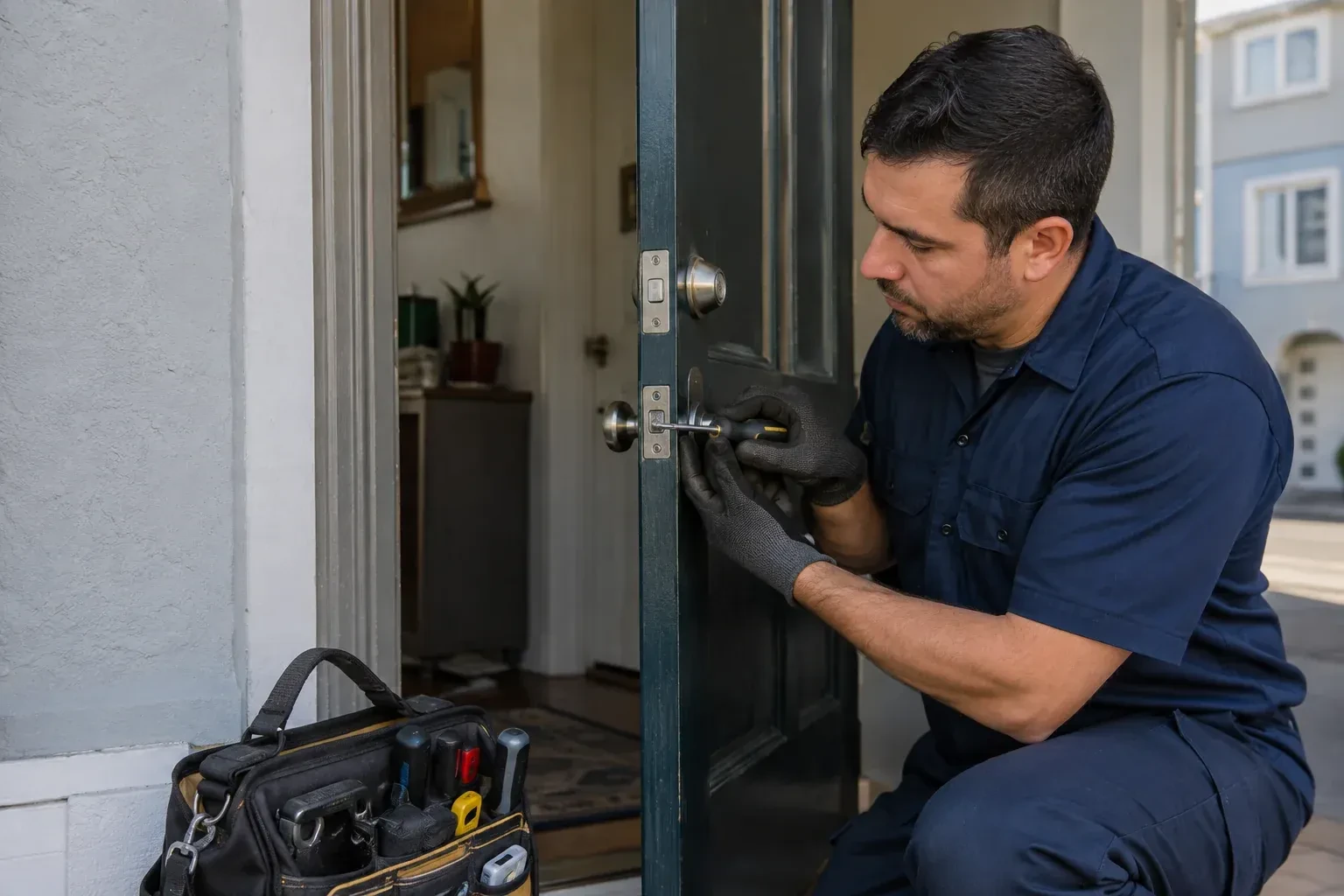
Winter, humidity, house settling and plain old wear all leave their marks on locks. The advice here helps you tell normal ageing from a real problem, and it explains what you can safely do yourself and where a professional hand is worth having.
- Bulletin 1Broken Key Extraction: what the visit coversIf a key has just snapped in your lock, the most helpful thing you can do is nothing further to the lock. Keep the half in your hand, note whether the door is locked, and resist the tweezers and the glue, both of which…Read
- Bulletin 2Spare Car Key Duplication: before you callThe proximity fob has ridden in a pocket for years, the range feels shorter than it used to, and a dashboard warning mentioned a battery a while back. Nobody has sorted out what happens on the day it finally goes dark.Read
- Bulletin 3Deadbolt Installation: questions about the priceVery little is needed. Each spring and autumn, lock the door from inside and feel whether the bolt still goes home without the door being pulled; if it hesitates, the door has moved with the season and a small strike…Read
Straight answers
Lockout Services
What if my wallet and every document are locked inside?
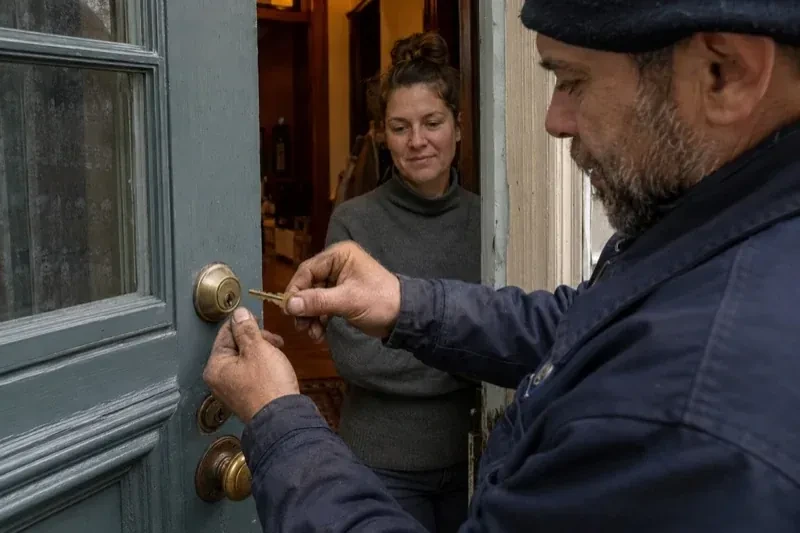
That is the most common version of a lockout, and there is a routine for it. Tell the locksmith on the phone so the plan is agreed before arrival. Often a neighbour can confirm you live there, a digital copy of a lease or bill is on your phone, or a property manager can vouch for you. Where none of that is available, the locksmith opens the door and completes the identification check with the documents inside before leaving. Home Lockout Service
We need to open for customers. How do you sequence the visit?
Entry comes first and repairs second. Once authority is confirmed the door is opened, staff go in and start their routine, and the locksmith turns to the cause: extracting a broken key, rekeying for a lost one, re-springing a deadlatch or lifting a dropped door. Anything that can wait for a quieter hour, such as rekeying interior doors, is offered as a return visit so the shop floor is not blocked while it trades. Business Lockout Service
Is a broken key a sign the whole lock is worn out?
Sometimes, and the visit answers it. A key that failed from its own fatigue in a clean, smooth cylinder says nothing against the lock. A key that broke because the pins were worn flat, the cap had loosened or the keyway was full of grit says the cylinder needs a service or a rekey. One that broke in a corroded, pitted plug is telling you the lock is due for replacement. Broken Key Extraction
How is a forced storefront door repaired?
Aluminum storefront doors are attacked at the narrow stile, which bends under a pry bar, or at the hookbolt and glass. The locksmith straightens or replaces the damaged section where possible, fits a new narrow-stile deadbolt or hookbolt with its strike, and adds a latch guard or anti-pry astragal along the meeting edge so a bar has no purchase. Cores are rekeyed and codes reviewed. The inside release stays a single motion so the exit route is unchanged. Break-In Damage Lock Repair
Change or Rekey Locks
My keys were lost with something showing my address. Is rekeying enough?
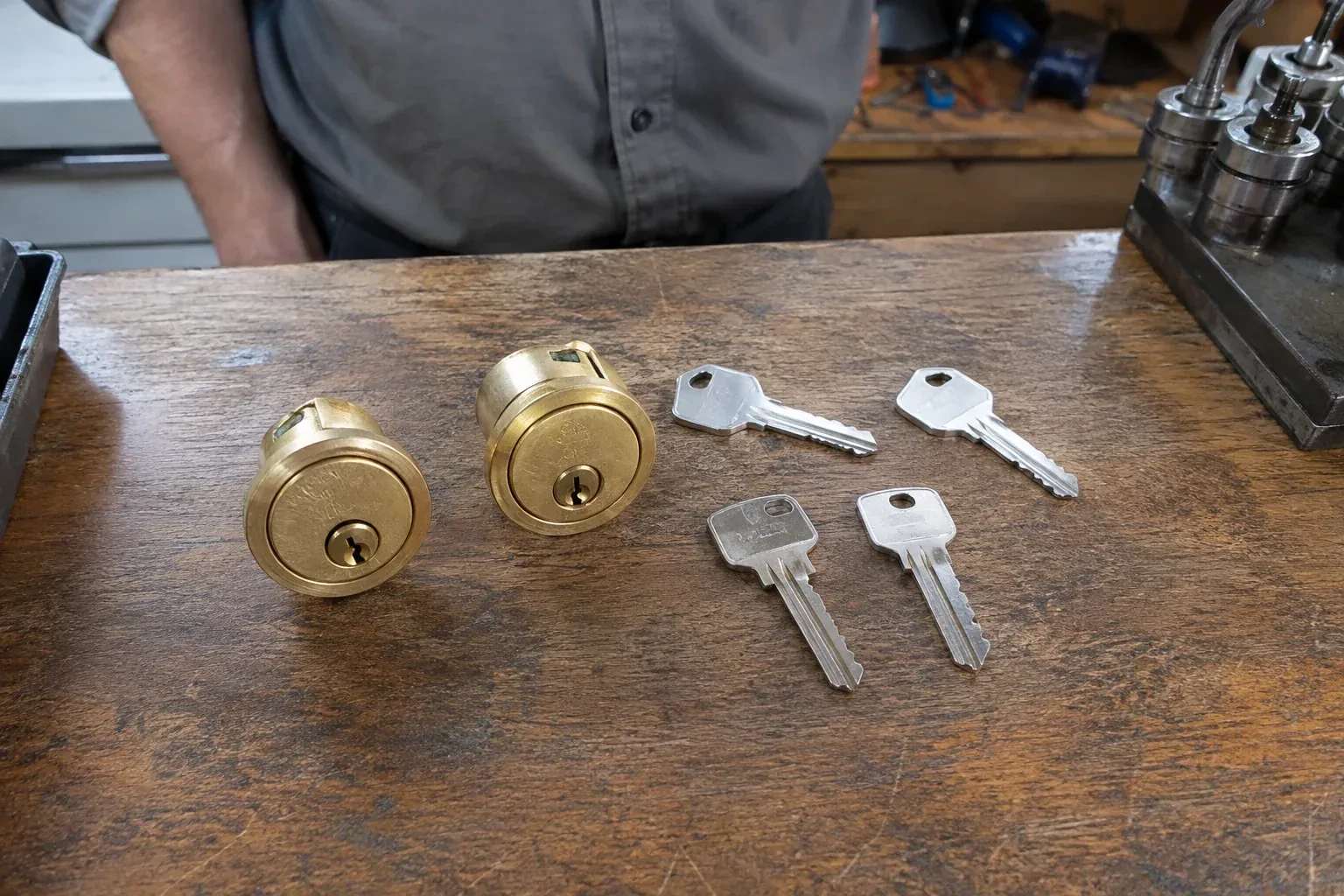
Rekeying is exactly the right response, because it makes the lost key useless at every door that was pinned. The locksmith will walk the property with you to be sure nothing is missed, including the garage side door, a shed and any padlock the same key opened, and will suggest changing any garage keypad code that was written on the same ring. After that, whoever finds the keys is holding brass that opens nothing on your property. Lock Rekeying
What do lock grades mean when I am picking a deadbolt?
Residential deadbolts are graded under an industry standard in three categories, security, durability and finish, with letter grades from C through A, so a lock marked with three A grades has met the highest level in each. Heavier commercial-pattern bolts are graded 1, 2 or 3, with 1 the highest. The grades let you match hardware to a busy family door or an exposed side entrance without relying on the weight of the box. Deadbolt Installation
Will a new lock fit the holes already in my door?
Usually, yes. Most residential doors are prepared to standard sizes, a 54 millimetre cross bore and a backset of 60 or 70 millimetres, and most modern hardware adjusts between those backsets. The locksmith measures before choosing, so the new lock is matched to the door rather than the other way around. Where an older mortise lock or an unusual bore is found, filler plates, extension kits or a carefully jigged new bore bring the door to standard. Lock Replacement & Upgrade
The key turns all the way round but the bolt stays put. What is wrong?
On a cylinder mortise lock this points to the cylinder rather than the case. The set screw that holds the cylinder in the door has loosened or stripped so the whole cylinder rotates, or the cam on the back of the cylinder has worn or is the wrong shape and no longer catches the bolt lever. Both are fixed by resetting or replacing the cylinder and its set screw, and the case itself is usually fine. Vintage Mortise Lock Service
High Security Locks
My safe was in a fire or a flood. Does that change how it gets opened?
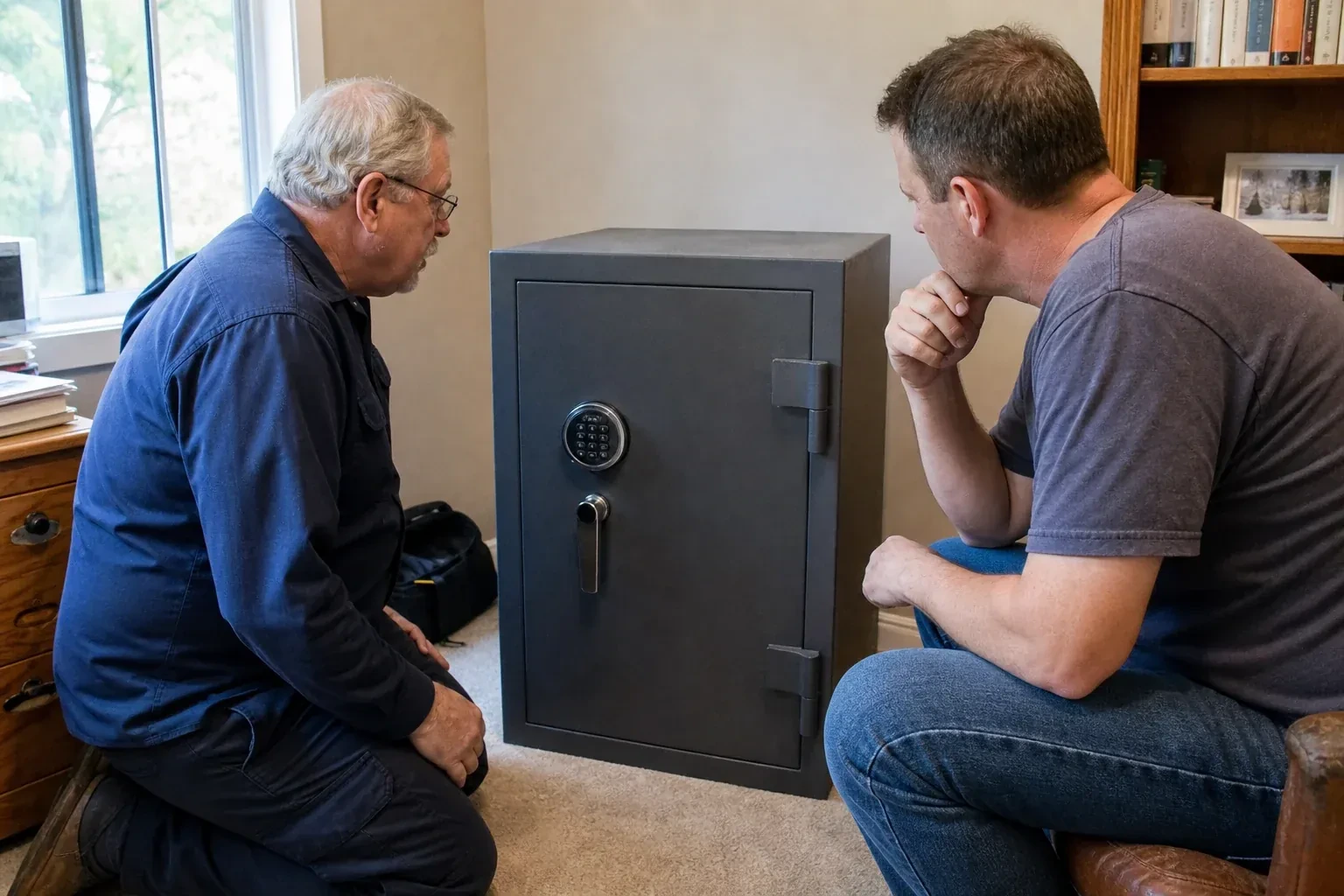
It can. Heat or water exposure sometimes trips a relocker or damages the bolt work independently of the combination lock, so the locksmith checks for that first rather than assuming the lock itself has failed. A safe with fire-rated insulation may also need that lining checked once open, separately from the lock work. Safe Opening & Combination Change
Why does the inside of my fireproof safe feel damp?
A fire-rated interior works by sealing tightly, and that same seal traps ordinary household humidity over time with nowhere to go. Opening the door for a few hours every few weeks lets trapped air exchange with the room, and a desiccant packet inside absorbs moisture between those openings if it is refreshed on schedule. A musty smell or a soft-feeling document is the interior telling you it needs airing out. Safe Installation & Servicing
What should I do when a controlled key is lost?
Tell your locksmith so the register is updated, then decide together what the loss means. If the key was lost with nothing identifying your address, the practical risk is low and many people simply strike it off. If it went missing with identification or from a known person, the affected cylinders can be repinned so that key stops working while the rest of the system continues. Because the keyway is controlled, you know that no further copies exist. High Security Locks
Commercial Locks
Can all our doors be put on a single key?
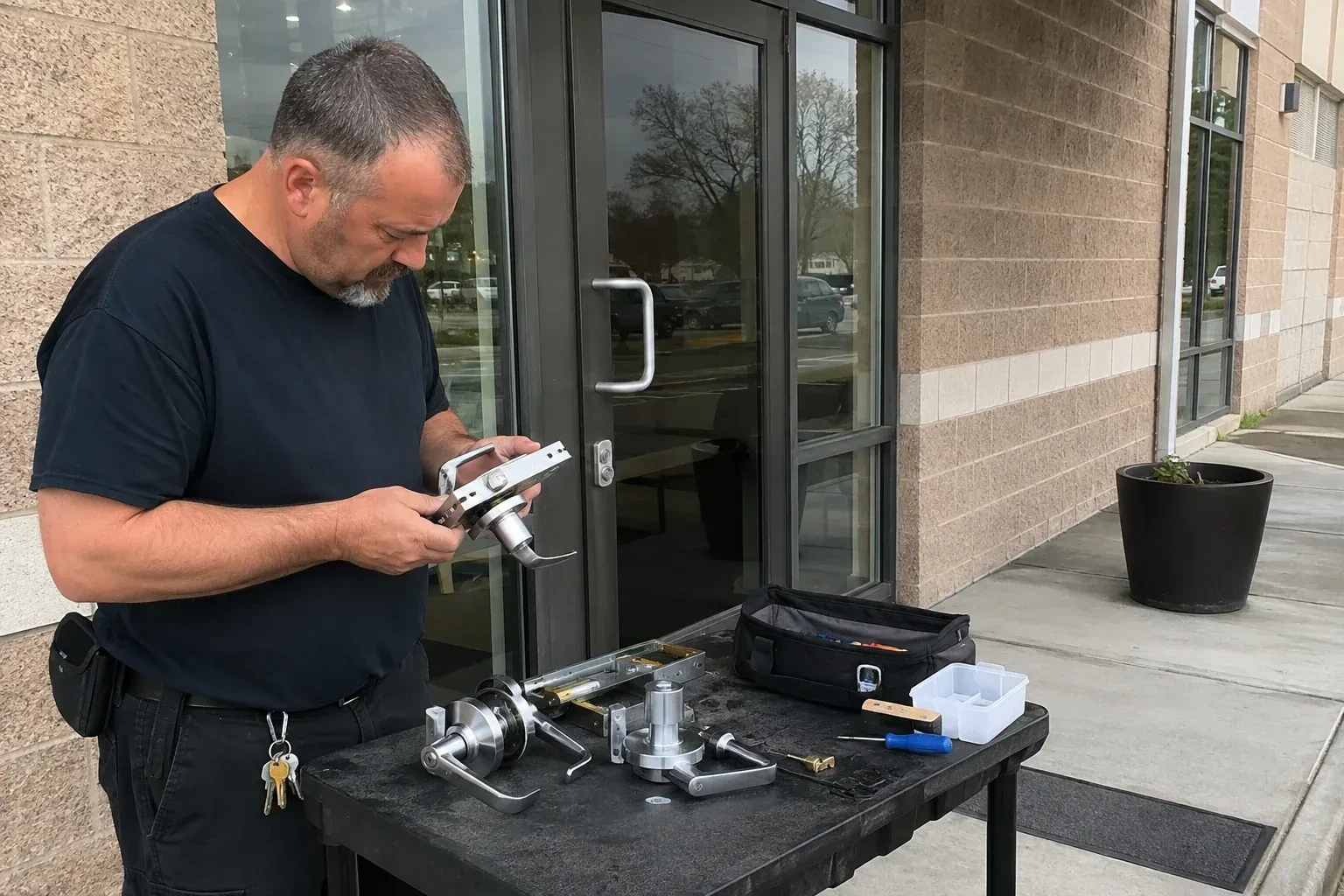
Yes, if the cylinders share a keyway or can be fitted with ones that do. Keying everything alike is popular with small shops because staff carry one key and spares are simple. The trade-off is that one key then opens the cash room as readily as the front door. Many businesses choose a middle path: the doors everyone uses on one key, the sensitive rooms on another, and an owner's master that opens both. Commercial Rekeying
What happens if a master-level key goes missing?
The current chart shows exactly which doors that level was designed to reach, which for a lost top-level master can mean the whole property rather than one group. Depending on how the key was lost and who else already holds that level, the usual options are repinning the affected cylinders and reissuing keys to the remaining holders; a restricted keyway lowers the odds of an unauthorized copy being cut but is not proof that one has not been made. Without a current chart, the first task is reconstructing that scope. Master Key System Design
What happens to the doors if the power goes out?
Outage behaviour depends on how that opening was built: battery backup can be sized to carry the reader, the lock and the controller through a typical outage, so a brief power loss need not lock anyone out or, on a fire-alarm-tied opening, lock anyone in, but that backup and any mechanical key override are specified per opening rather than assumed for every door. Fail-safe hardware unlocks once power has been out longer than the backup lasts; fail-secure hardware stays locked, and what opens it depends on the hardware chosen. Access Control Installation
Can one visit cover several doors in the same building?
Yes, and it is common. A building rarely has only one exit affected by an occupant-load or fire-rating question; stairway doors, assembly-room exits and any doors altered together during a renovation are usually assessed and fitted in the same visit, with one written record covering every device installed across the building. Panic & Exit Hardware
Car Keys
My wallet, permit and everything else are locked inside. What then?
That is the ordinary case, and there is a routine for it. Tell the locksmith on the phone so the plan is agreed in advance. Often the plate can be matched to a photo of the permit on your phone, a family member can bring identification, or a fleet manager can confirm a company vehicle. Otherwise the door is opened and the documents in the glovebox are checked against your identification before the locksmith leaves. Car Lockout Service
What is the difference between adding a spare and replacing all keys?
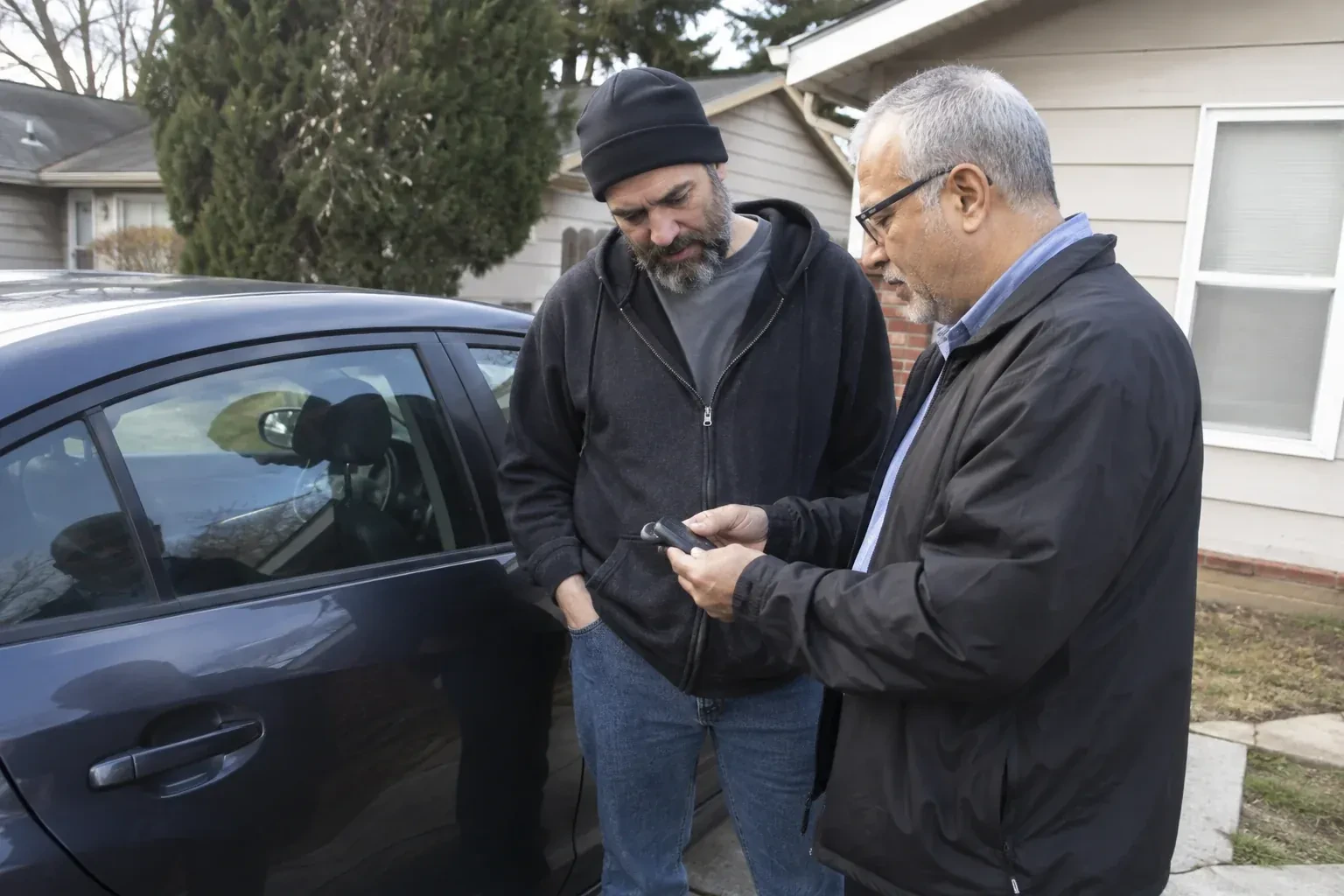
Adding a spare uses an existing working key as the reference: the new blade is cut and checked against it, and the immobilizer is asked to accept one more key alongside the old. Replacing all keys starts with nothing: the lock is decoded for a blade, and the immobilizer is reset to forget every previous key before new ones are stored. The second job is longer and sometimes needs manufacturer data, one more reason to keep a spare. Car Key Replacement
What if I have lost track of how many keys already exist for the car?
That is worth mentioning when you call, since it changes the plan. If the count is genuinely unknown, or a key was lost at some point and never accounted for, reprogramming the vehicle to accept only the keys currently in hand is often the sounder route, rather than adding a new spare on top of an uncertain set that might include a key nobody can locate anymore. Spare Car Key Duplication
What should I do if my fob gets wet?
Remove the battery as soon as possible and let the fob dry completely before testing it again, since a battery left in contact with a damp circuit board usually causes the lasting damage rather than the water itself. If the fob still fails to respond once it is dry, the shell and battery contacts are worth checking before assuming the electronics are beyond repair. Key Fob Programming