Sound familiar?Clarks Corners
- The call
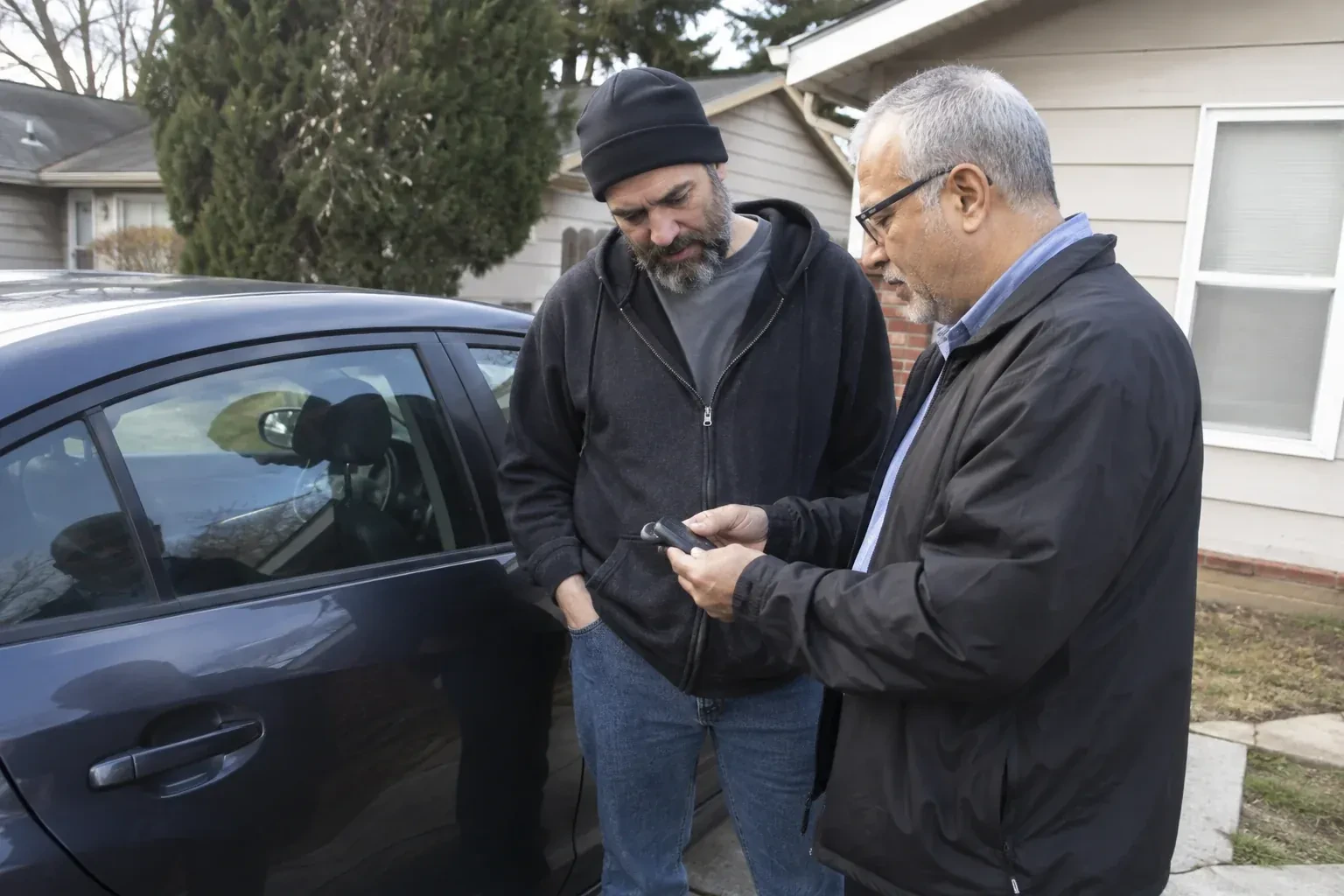
- The car is yours now, but somebody else still holds a key to it. Adding another key is not enough; you want the old ones to stop working the vehicle so the question is settled for good.
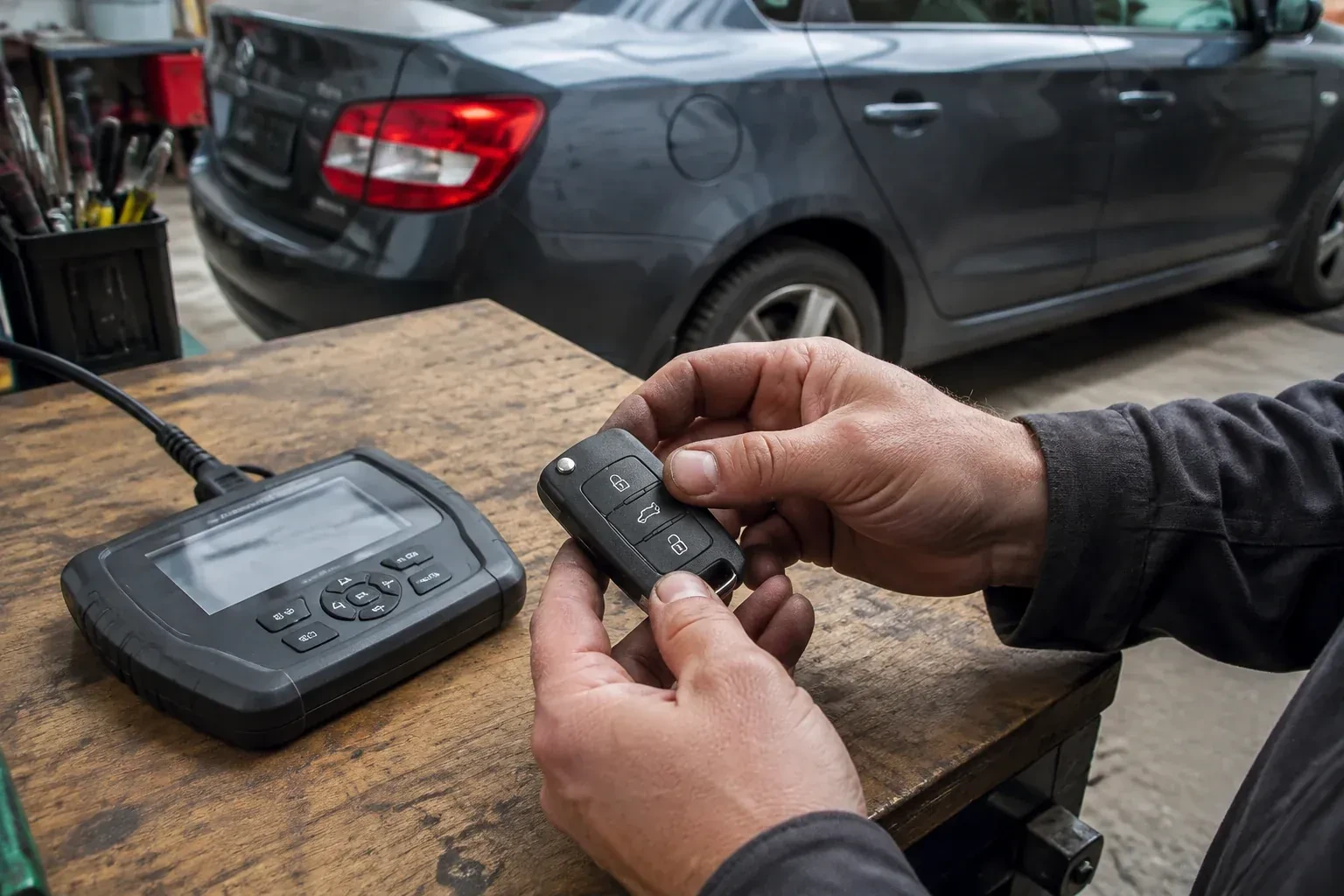
You bought the car privately and it came with a single key on a shoelace. Every time it leaves your hand you notice, and you would like a second one made before the first goes missing.
Most replacement keys are made where the car is parked. A mobile locksmith carries blanks, a cutting machine and programming equipment in the van, plugs into the diagnostic port and does the work on your driveway, in a parking garage or at the roadside. For most vehicles there is no need to move the car to a shop, and you watch the key cut and tested on the spot; a few systems still need a dealer or an equipped shop, flagged by the VIN check. The locksmith needs the vehicle's identity, proof of ownership, and what the old key could do, so the right parts are on board.
Sound familiar?Clarks Corners
Car Key Replacement · Clarks Corners
Scene 1
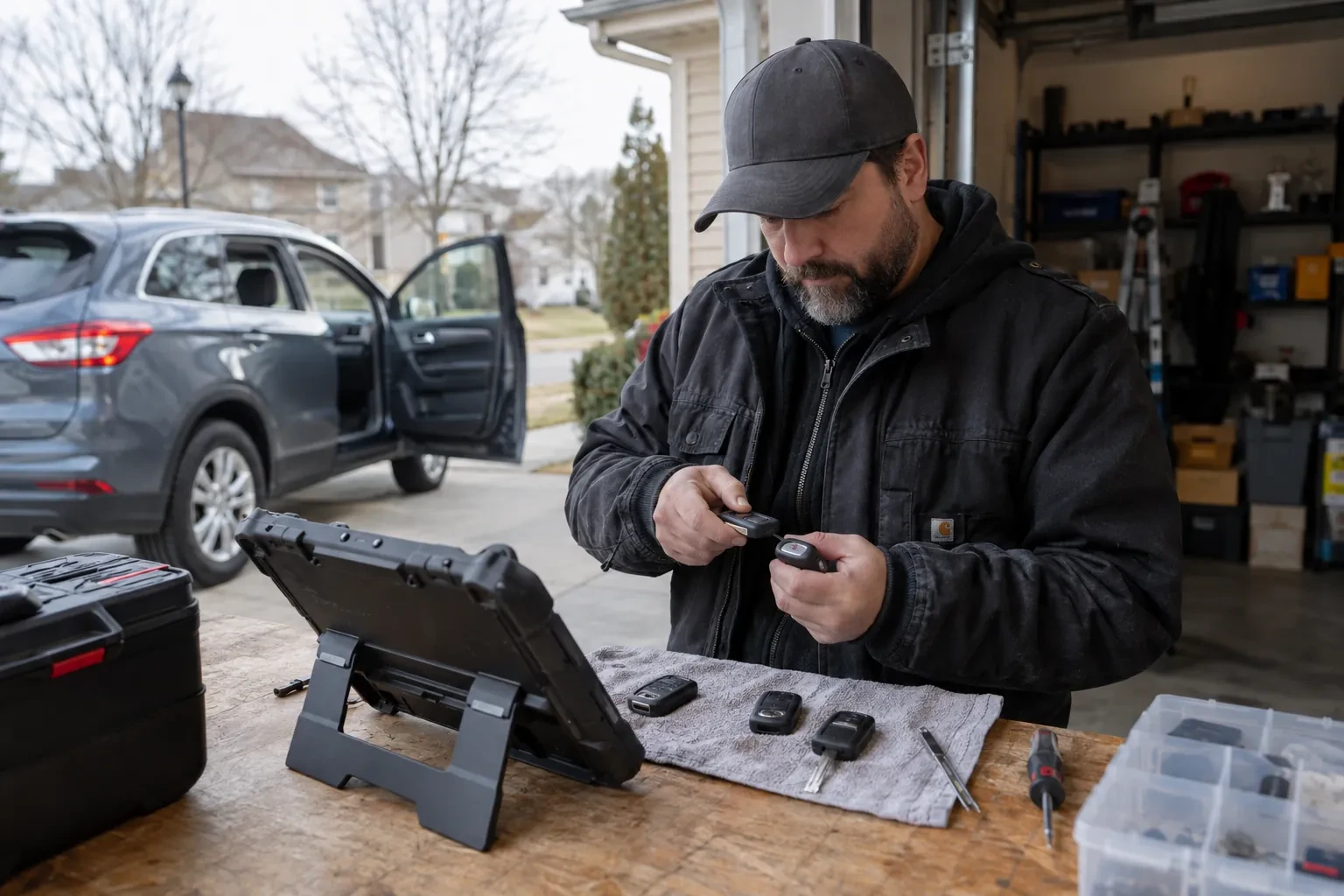
Programming writes to the vehicle's computers, so the locksmith checks the basics of the car before starting. A weak battery from a car that has sat locked for weeks is put on a maintainer so the voltage stays steady through the session. The diagnostic port under the dash has to be reachable, which means the car has to be opened first if every key is gone. Where the car is parked matters as well: an underground garage with poor light, a tight street spot or a snowbank against the driver's door all shape how the work is set up. A few questions on the phone cover most of this.
Scene 2
When the code is unavailable, the lock itself becomes the source. The locksmith works a decoding pick into the driver's door cylinder, feels each wafer to its set position and reads off the depth, producing a full cut sequence without removing the lock from the door. The blank is then cut to that reading and tried in the door and the ignition. On cars where the ignition carries an extra wafer the door lacks, the last position is found by trying the small number of possible depths. This is careful, patient work that leaves the door lock exactly as it was.
Scene 3
On a keyless car the door cylinder can go years without a key in it, which is exactly why it seizes with salt and grit. After the visit, use the emergency blade in the driver's door once a season so the wafers keep moving, and follow the vehicle or lock maker's own maintenance instructions once the salt is off the roads in spring, since automotive locks more often need cleaning than added lubricant. In a cold snap, a small tube of lock de-icer in a coat pocket does the job; hot water only refreezes inside. A lock that has been freed during the visit stays free with this little attention.
What shapes the quoteAgincourt Locksmith Pros
FeesSame any hour
Adding a spare uses an existing working key as the reference: the new blade is cut and checked against it, and the immobilizer is asked to accept one more key alongside the old. Replacing all keys starts with nothing: the lock is decoded for a blade, and the immobilizer is reset to forget every previous key before new ones are stored. The second job is longer and sometimes needs manufacturer data, one more reason to keep a spare.
Often, yes, for vehicles with a supported conventional key system: the car is opened, a blade is produced by decoding the door lock or retrieving the factory key code, and the immobilizer is reset so the missing keys are erased before new ones are stored. A key-card or phone-key vehicle, or one needing a dealer procedure, follows its own route instead, which is why the VIN is asked for on the first call.
Government photo identification plus the vehicle permit issued by ServiceOntario, the green ownership showing the VIN, is the usual pair. An insurance slip or a lease agreement in your name also works. For a company vehicle, a work order or letter from the fleet manager naming the VIN covers it. If you bought the car days ago, bring the bill of sale and the signed permit until the transfer is done.
TorontoOntario
Car Key Replacement · Toronto, Agincourt, Agincourt North, Sullivan, Tam O'Shanter
Every square is one home in a hundred.
On-site assessment
You bought the car privately and it came with a single key on a shoelace.
(289) 806-4250, open 24/7.
On-site assessment preferred · (289) 806-4250, open 24/7