Sound familiar?Toronto
- The call
- The accountant's office keeps a decade of client files in cardboard boxes because the only safe in the building is a small drawer safe meant for a laptop, nowhere near large enough for binders of paper.
Behind the filing cabinets sits a heavy floor safe nobody ever bolted down, left exactly as the last owner set it. It opens fine, but a determined pair of hands could simply tip it into a van.
A safe that is not bolted down is not really a safe, just a heavy box that a thief can carry to somewhere quieter to open. Anchoring is the part of installation that turns a portable object into a fixed one: the floor or wall construction is identified first, correct anchor bolts and hardware are chosen for concrete or a wood subfloor, and the unit is leveled and torqued into place. The same principle applies to an existing safe discovered sitting loose in a corner; it can usually be anchored properly without moving it far.
Sound familiar?Toronto
Safe Installation & Servicing · Toronto
Scene 1
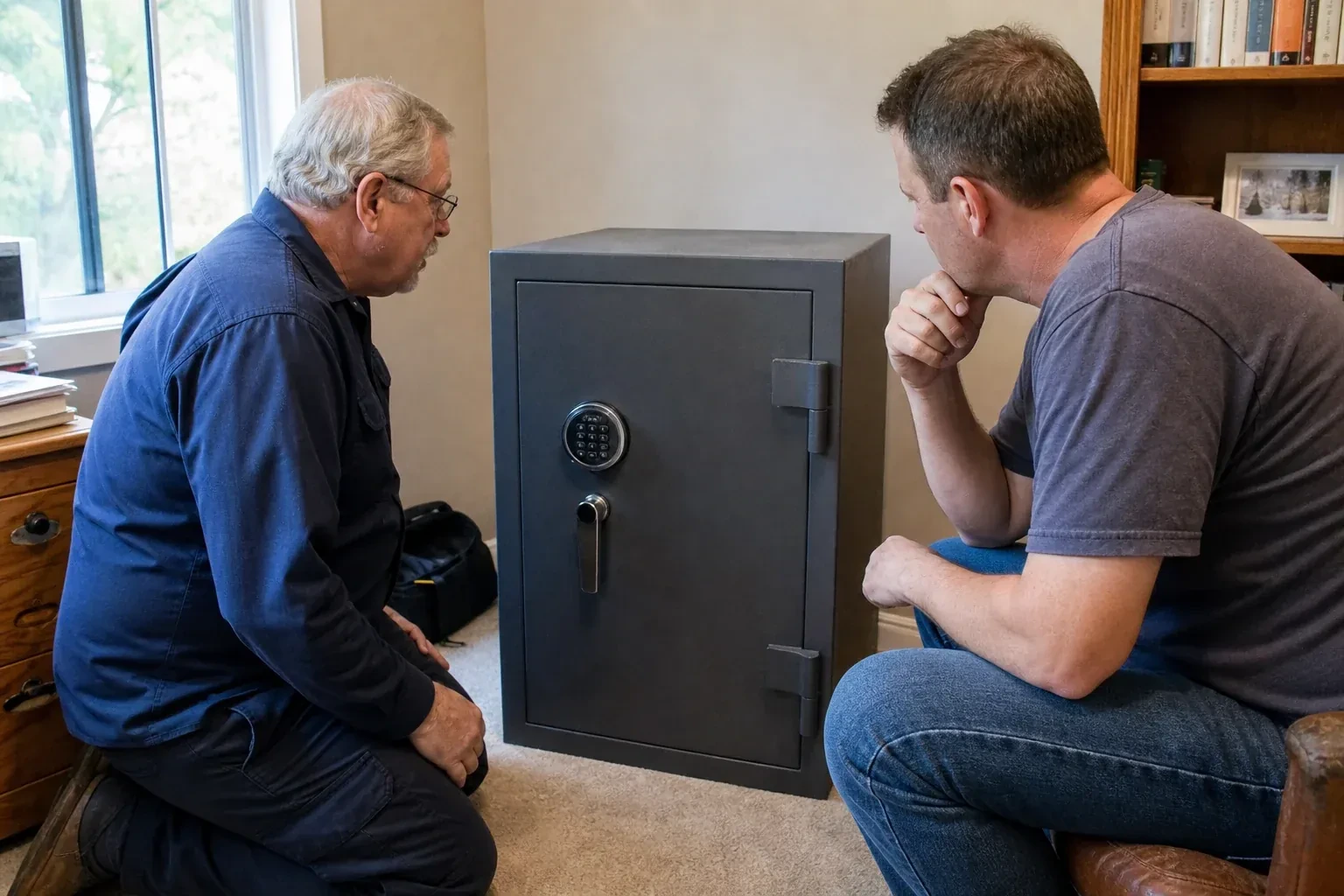
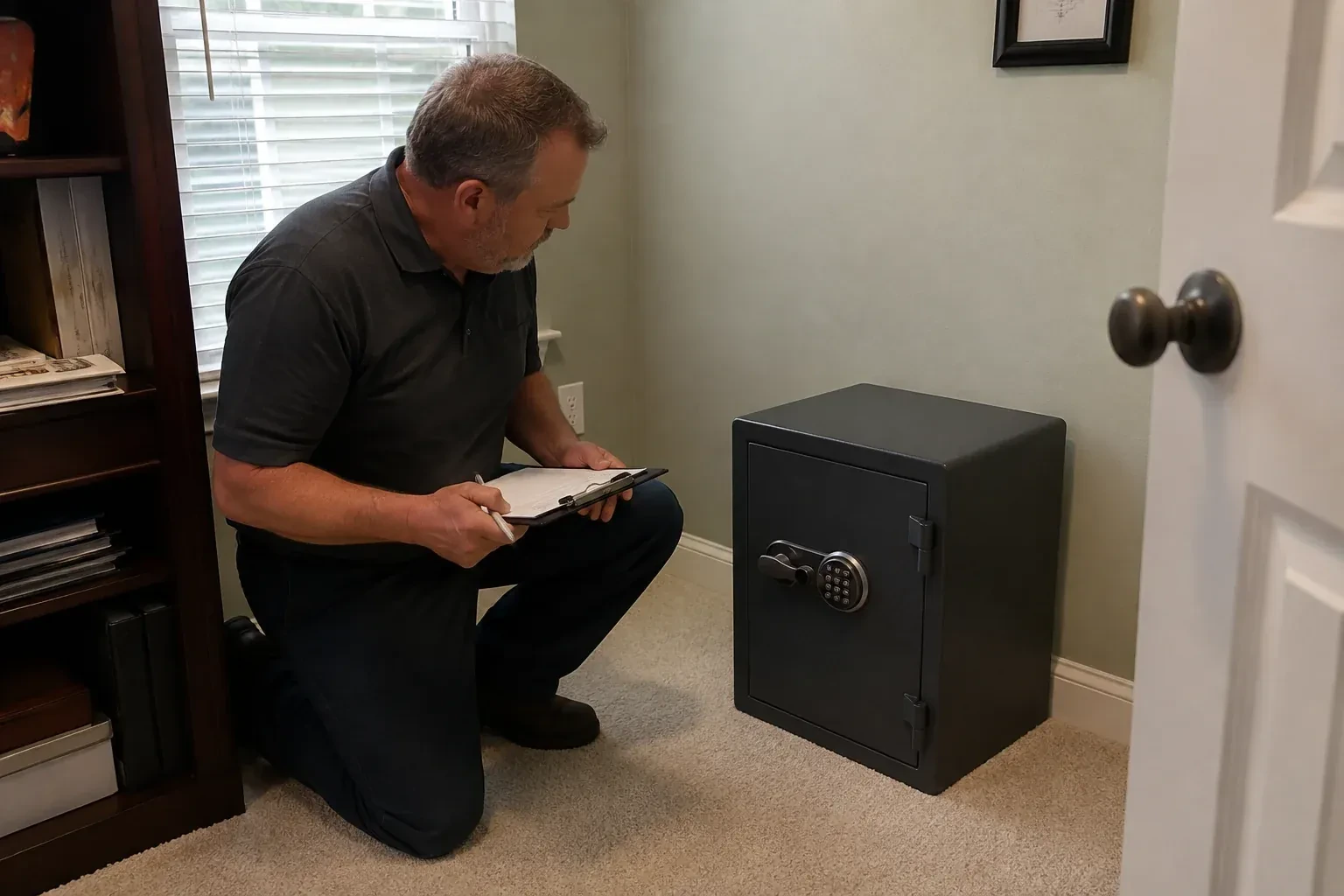
The surface behind the safe decides how it gets anchored, so it is checked before anything is ordered. Solid concrete accepts one style of anchor bolt; a wood subfloor over joists needs a different fastener reaching into structural framing rather than just the surface layer; a tiled floor cannot take a bolt at all without risking a crack around it. The locksmith also looks for slope, dampness, or a cold exterior wall that could sweat in humid weather, since all three affect where the safe should actually stand, not just how it gets bolted down.
Scene 2
The last stage is deliberately unhurried: the lock is opened and closed a final set of times with the owner present, the bolts are checked by hand for any give, and the door is confirmed to swing freely without catching on the frame or the floor. Any paperwork that identifies the model and its ratings is gathered and handed over, along with spare keys for a mechanical override where one exists. The owner sets the combination or code they will actually use, and nobody else leaves the room knowing it.
Scene 3
The model number, the burglary and fire ratings, and a note of how and where the unit was anchored are all details worth keeping on file, ideally somewhere other than locked inside the safe itself. An insurer asking about coverage for cash or valuables will often want exactly this information, and having it ready saves a search through old boxes later. A few photographs taken during installation, showing the anchoring and the rating label, cover most of what gets asked for afterward.
What shapes the quoteAgincourt Locksmith Pros
FeesSame any hour
A fire-rated interior works by sealing tightly, and that same seal traps ordinary household humidity over time with nowhere to go. Opening the door for a few hours every few weeks lets trapped air exchange with the room, and a desiccant packet inside absorbs moisture between those openings if it is refreshed on schedule. A musty smell or a soft-feeling document is the interior telling you it needs airing out.
Knowing roughly what the safe will store, whether it is a new purchase or an existing unit, and what floor or wall it will sit against covers most of what shapes the visit. If the safe is already on site, its approximate weight and dimensions help too, along with whether it currently has a working lock and combination. An insurer's stated rating requirement, if there is one, is worth mentioning as well.
It depends entirely on the unit's size and construction, since the steel body itself usually weighs far more than whatever ends up inside it. A small document safe and a large commercial unit sit at very different points on that scale. Confirming the safe's own weight before delivery, and checking it against the floor it will sit on, is part of the assessment rather than something guessed at on arrival.
TorontoOntario
Safe Installation & Servicing · Agincourt, Agincourt North, Clarks Corners, Sullivan, Tam O'Shanter
Every square is one home in a hundred.
On-site assessment
Behind the filing cabinets sits a heavy floor safe nobody ever bolted down, left exactly as the last owner set it.
(289) 806-4250, open 24/7.
On-site assessment preferred · (289) 806-4250, open 24/7