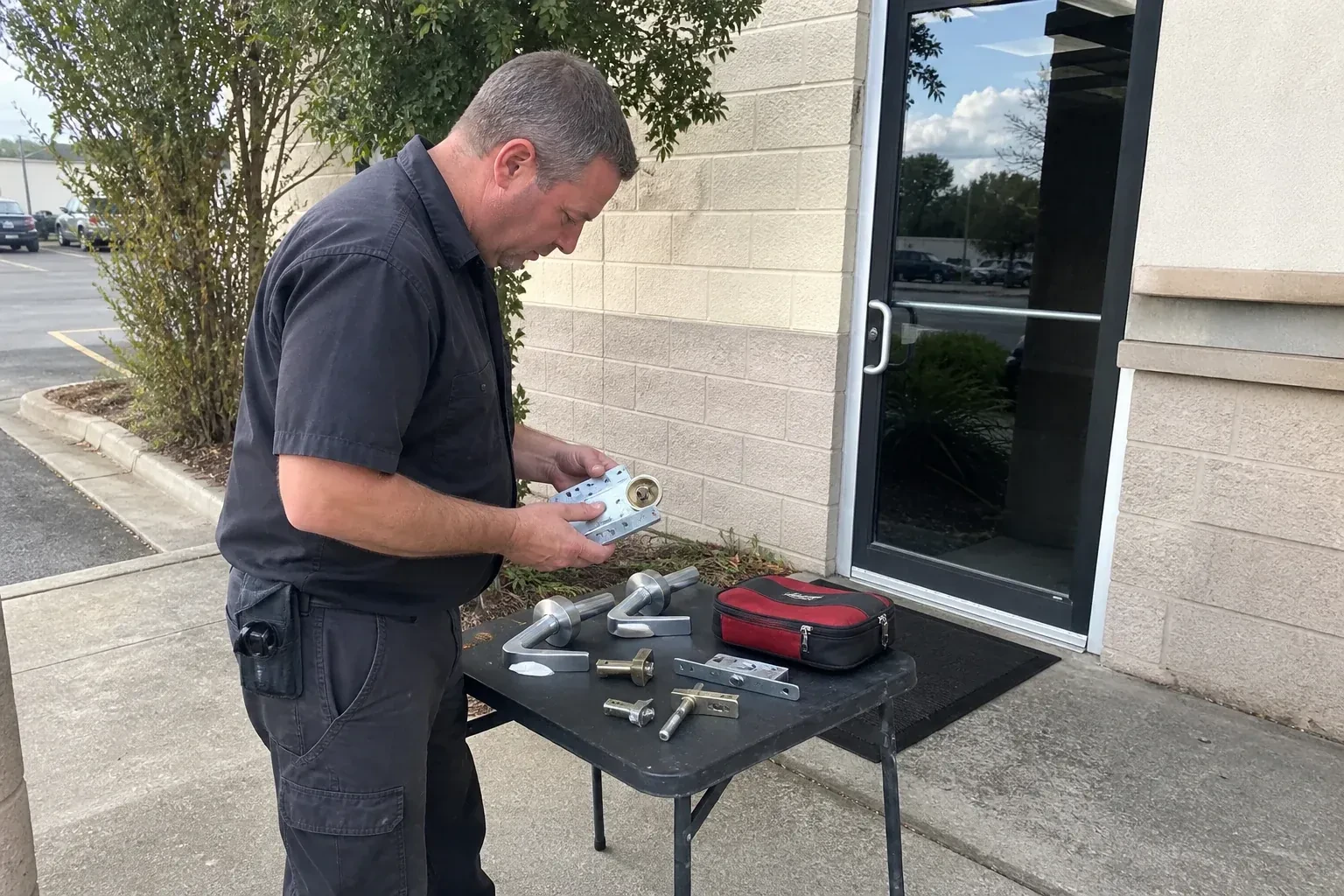
Sound familiar?Tam O'Shanter
- The call
- The moving truck has left, half the boxes are inside, and the single key the previous owner handed over turns the knob but not the deadbolt. Someone locked it on the way out, and nobody has a key that fits it.
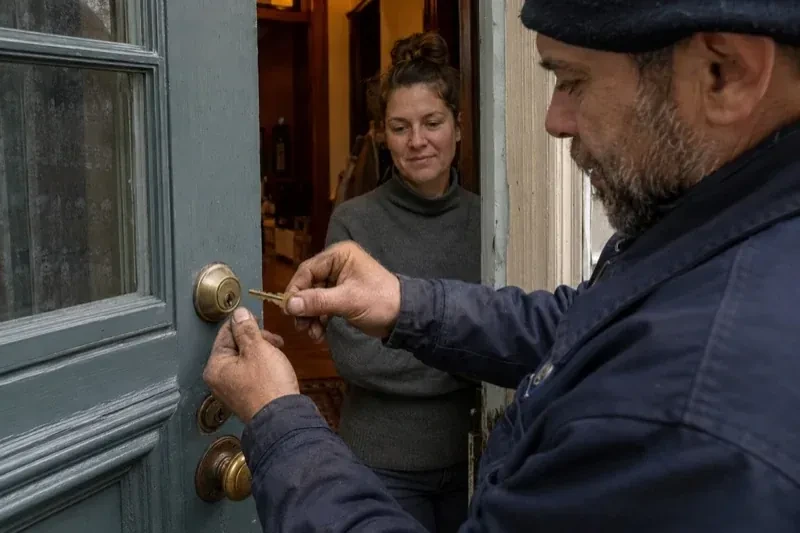
The moving truck has left, half the boxes are inside, and the single key the previous owner handed over turns the knob but not the deadbolt. Someone locked it on the way out, and nobody has a key that fits it.
Different locks call for different openings, and a lockout visit starts by reading the hardware on your door. A spring latch in a knob or lever behaves differently from a deadbolt, a mortise lock in an older home has its own internals, and a high-security cylinder resists shortcuts that work on builder-grade hardware. A smart lock adds batteries and, on many models, a hidden keyed override, though some key-free designs rely instead on their own backup power, codes or app access. Knowing which is in front of them lets the locksmith pick, decode or bypass the mechanism, keeping the lock intact rather than reaching for a drill.
Sound familiar?Tam O'Shanter
Home Lockout Service · Tam O'Shanter
Scene 1
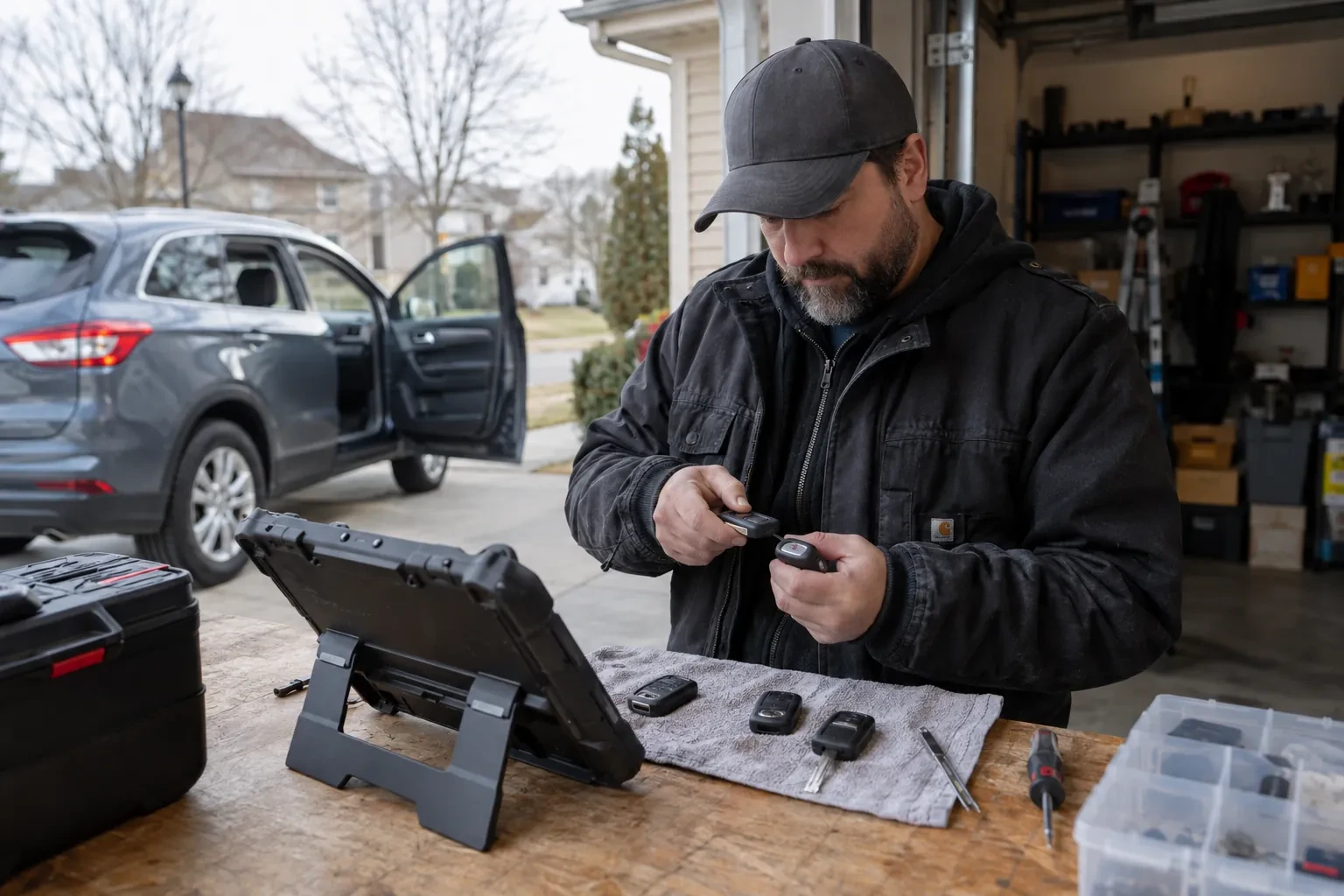
Electronic locks get their own set of questions. Is the keypad completely dead or just refusing the code? Are there battery contacts on the outside that accept a nine-volt battery for a temporary boost? Is there a mechanical override cylinder behind a cover, and does anyone hold the key for it? Is the lock paired to an app that could unlock it from a phone, and has the phone been factory reset lately? These checks decide whether the door can be opened by simply restoring power, by using the override cylinder, or by treating it like any other lock. It also tells the locksmith what to reset once you are inside.
Scene 2
A thrown deadbolt has no bevel to exploit, so the cylinder itself has to be persuaded. The locksmith applies light rotational tension to the plug and sets each pin to the shear line, or reads the pin heights with a decoder and cuts a key that matches. Some cylinders let the plug turn one way only; a plug spinner flicks it past the point where the tailpiece engages so the bolt can retract. Security pins slow the process rather than stop it. The bolt draws back, the door opens, and the cylinder is cycled with your key afterwards to confirm nothing inside was disturbed by the work.
Scene 3
When the lockout traced back to a door that had sagged or swollen, you get more than an open door: the reason is dealt with. Hinge screws that had worked loose are tightened or replaced with longer ones that bite into the framing, the strike plate is adjusted or its pocket deepened so the bolt has room to throw fully, and any weatherstrip that was pushing the door out of square is trimmed. Afterwards the bolt should slide with a fingertip on the thumb-turn and no shoulder on the door. Check it again at the turn of each season, since wood keeps moving with the humidity, and a two-minute screw check saves a return visit.
What shapes the quoteAgincourt Locksmith Pros
FeesSame any hour
That is the most common version of a lockout, and there is a routine for it. Tell the locksmith on the phone so the plan is agreed before arrival. Often a neighbour can confirm you live there, a digital copy of a lease or bill is on your phone, or a property manager can vouch for you. Where none of that is available, the locksmith opens the door and completes the identification check with the documents inside before leaving.
Drilling is the last rung, reached only when the cylinder has genuinely stopped cooperating. Typical reasons are a plug seized by corrosion or a failed spring, a key snapped deep inside that blocks the pins, a high-security cylinder whose anti-pick features make picking impractical, or a lock already damaged by someone's earlier attempt. The decision is explained before the drill comes out, the hole is confined to the cylinder, and replacement hardware goes in straight afterwards.
Yes, one way or another. If you choose to rekey, the cylinder is set to a new combination and fresh keys are cut for it on the spot, usually two or three, and tested in each door they should open. If you prefer to keep the existing pinning, a new key can be cut to the lock's code or by decoding the cylinder. Either way you are not left relying on a key that is somewhere else.
TorontoOntario
Home Lockout Service · Toronto, Agincourt, Agincourt North, Clarks Corners, Sullivan
Every square is one home in a hundred.
On-site assessment
The moving truck has left, half the boxes are inside, and the single key the previous owner handed over turns the knob but not the deadbolt.
(289) 806-4250, open 24/7.
On-site assessment preferred · (289) 806-4250, open 24/7