Sound familiar?Tam O'Shanter
- The call
- Someone tried to pry the little door on the mailbox open with a screwdriver, and though the mail sitting inside is untouched, the lock now sits crooked in its hole and the key barely catches when it is turned.
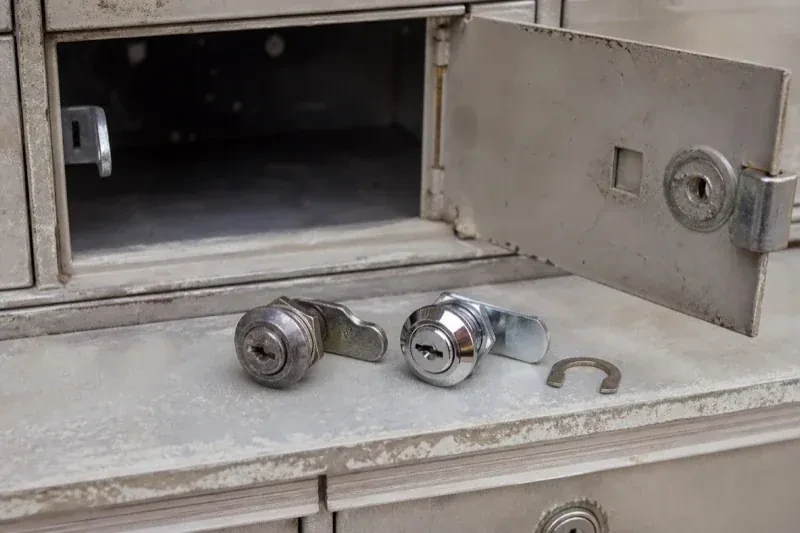
The mailbox key snapped clean off in the lock last week, and the stub is still sitting somewhere inside the cylinder. Nothing else on the ring gets anywhere near that keyway, and the mail is piling up because of it.
Small outdoor cam locks take a beating over a Canadian winter: road spray, salt, and repeated freezing leave the keyway gritty and the cylinder stiff long before the metal actually fails. Replacement at that point is straightforward, since the lock is a self-contained unit that unscrews from inside the compartment door. The new cylinder goes in following its own maker's lubrication instructions from day one, and a couple of fresh keys mean the whole assembly turns smoothly again.
Sound familiar?Tam O'Shanter
Mailbox Lock Replacement · Tam O'Shanter
Scene 1
A lock rarely fails entirely on its own; the door around it plays a part too. The locksmith checks whether the little door still sits square in its opening, whether a hinge has loosened, and whether a previous attempt to pry it open has left the metal bent or the latch misaligned. A compartment door that no longer closes flush will resist even a brand new lock, so any bend or looseness found here is dealt with alongside the lock itself rather than left for another visit.
Scene 2
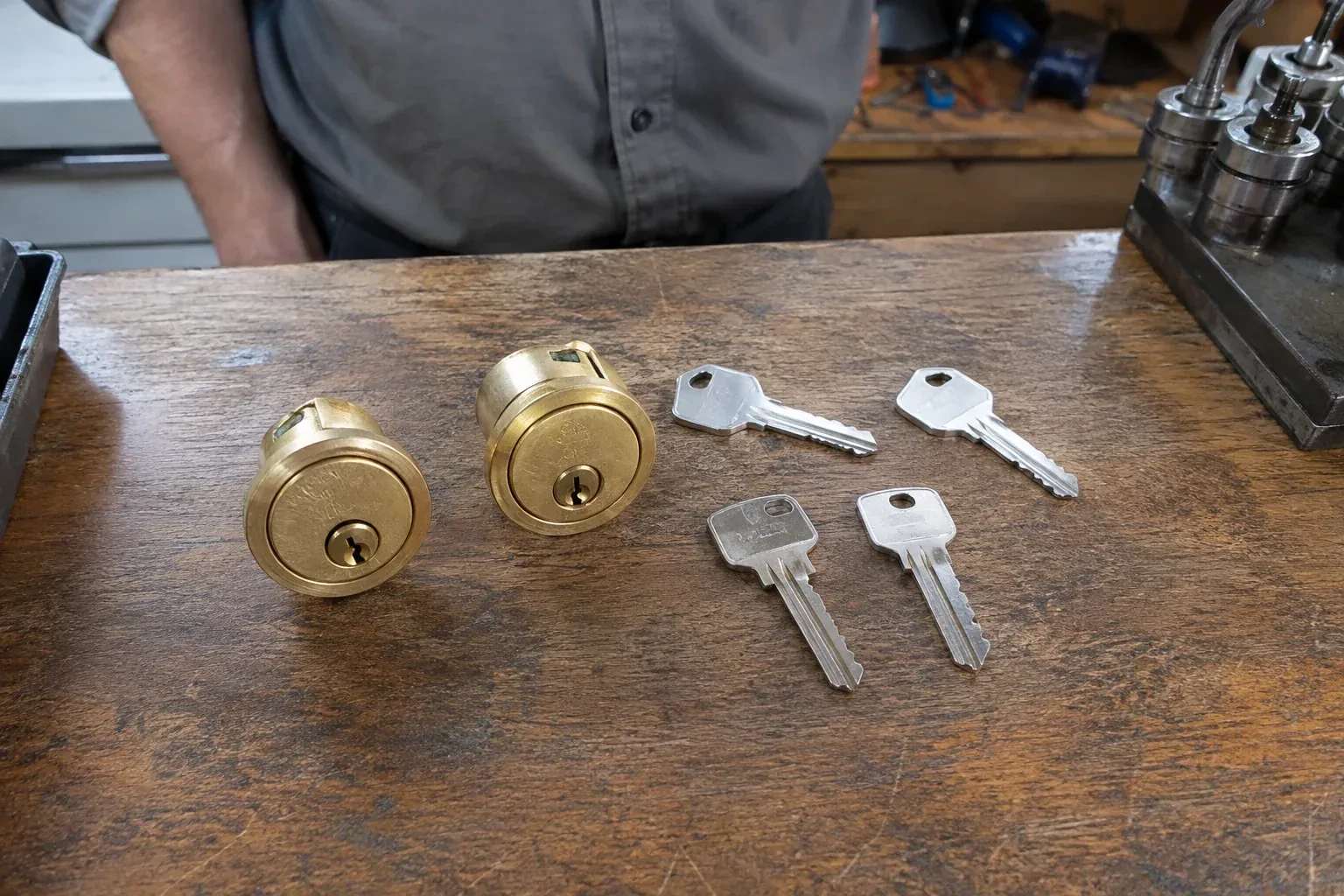
With the compartment door open, the old lock is usually removed from the inside: a retaining nut is unscrewed with a small wrench or nut driver, or a spring clip is pressed free, and the whole cylinder and cam lift out as one piece. When the compartment cannot be opened this way because the key is lost, snapped, or simply unknown, picking or decoding is tried first, and the lock is drilled only when that is not practical, aimed precisely at the wafers so the plug turns and the housing releases without damaging the door around it. Either route ends the same way, with an open hole ready for the matched replacement.
Scene 3
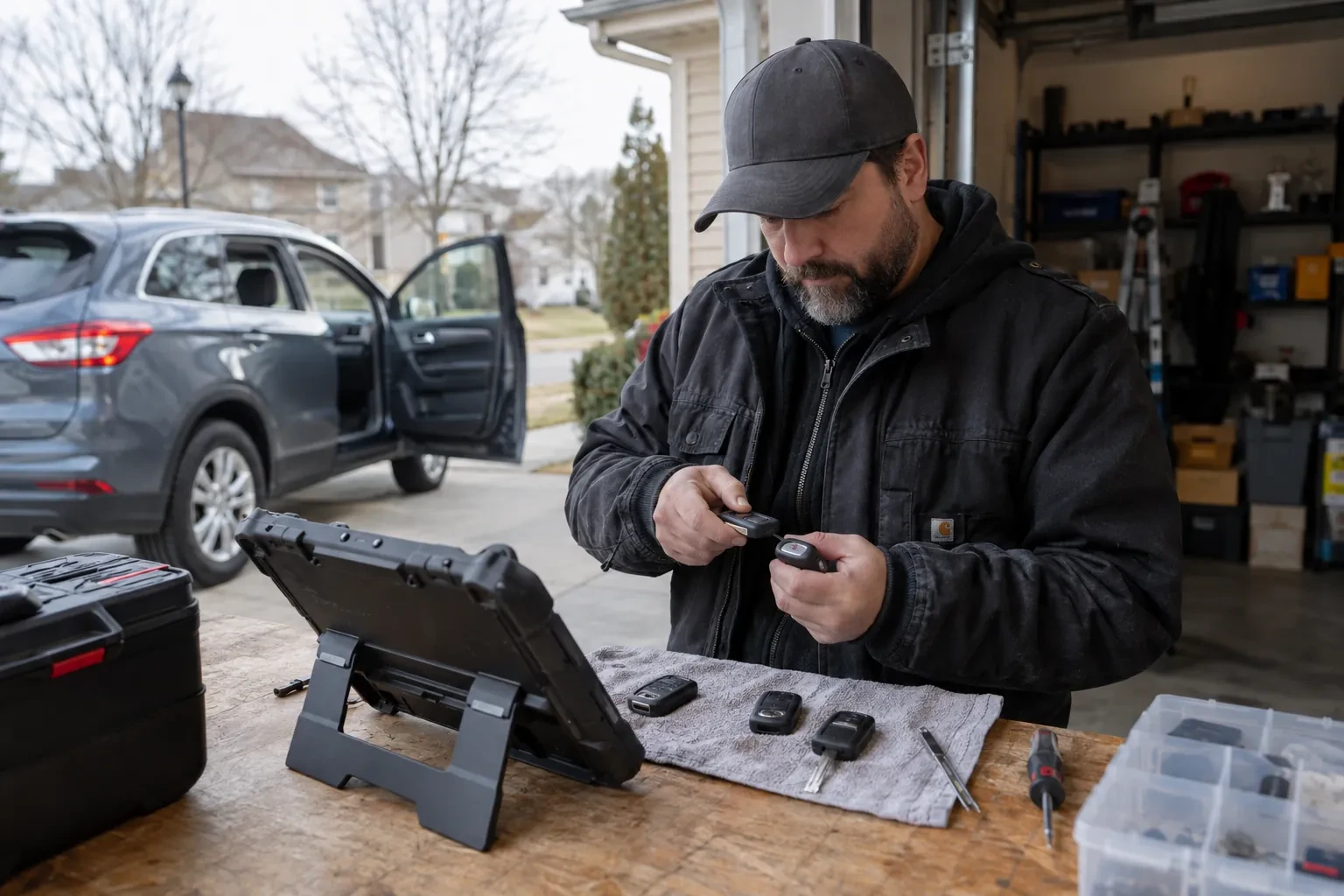
The visit ends with two freshly cut keys in hand, both tested in the lock before the locksmith leaves. Neither is copied from a worn original, so they turn cleanly rather than needing a wiggle the way an old, thinned key sometimes does. It is worth trying each one once more after the visit, deciding who in the household keeps which key, and noting somewhere at home which key belongs to which door if there is more than one lock on the property.
What shapes the quoteAgincourt Locksmith Pros
FeesSame any hour
Yes, and it is a common reason for this visit. Ownership or a lease showing the address, plus photo identification, is generally enough to confirm the compartment is yours to change. The old lock is opened without a key using the same techniques used elsewhere, then swapped for a new one, so whoever held the previous key no longer has any use for it.
It can, if both locks share a compatible keyway and are fitted with cylinders cut to the same combination during the same visit. This is arranged upfront, since it means keying the mailbox lock to match an existing door rather than the usual standalone replacement. Each lock involved is tested afterward so a single key turns every door named, and any other locks on the property keep their own separate keys.
A private mailbox, whether a standalone box at the curb or a slot in a house door, belongs entirely to that home. A building's mailbox panel groups many small locking compartments in one frame, usually in a lobby, with each compartment assigned to a unit. The lock itself works the same way in both cases; what differs is who confirms the change and how many other doors sit nearby.
TorontoOntario
Mailbox Lock Replacement · Toronto, Agincourt, Agincourt North, Clarks Corners, Sullivan
Every square is one home in a hundred.
On-site assessment
The mailbox key snapped clean off in the lock last week, and the stub is still sitting somewhere inside the cylinder.
(289) 806-4250, open 24/7.
On-site assessment preferred · (289) 806-4250, open 24/7