Sound familiar?Agincourt North
- The call
- You just leased the empty unit next door and want the new tenant to open their own suite without a key to yours, to the loading dock, or to the electrical room down the hall.
The keypad on the side door has started sticking on cold mornings, codes get shared instead of reset, and half the staff still remember a code you meant to retire two hires ago.
A single door can run on a standalone keypad or card reader that stores its own list of who may enter, though it can still need a power or network connection to work. A building with several controlled openings usually makes more sense on a networked setup instead, where distributed controllers share schedules and credentials and management software brings their logs together into one view. The locksmith sizes the choice to how many doors need controlling and how much the business wants to manage centrally, rather than defaulting to a single approach for every job.
Sound familiar?Agincourt North
Access Control Installation · Agincourt North
Scene 1
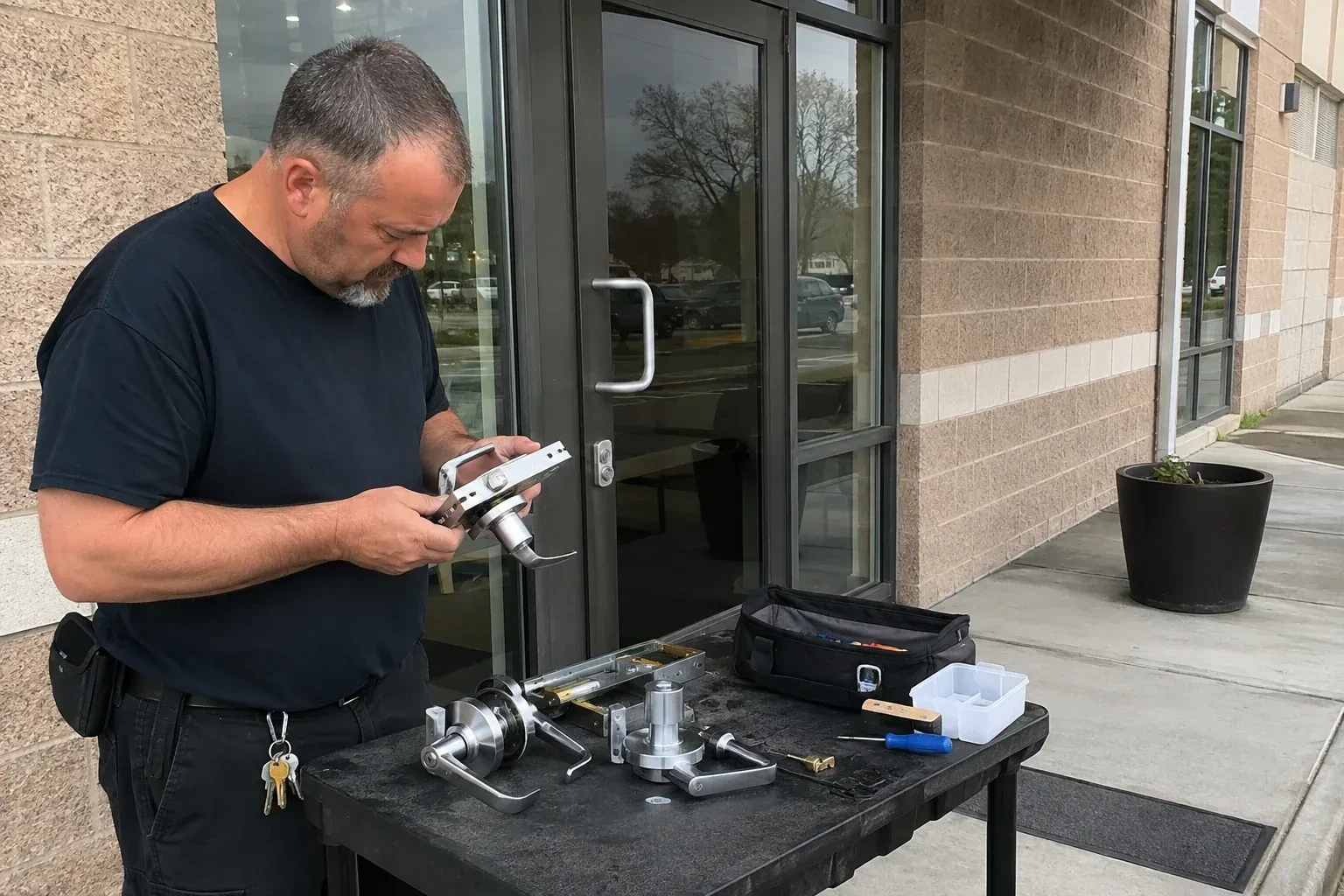
A door that leads outside along a path people use to leave the building gets special attention, no matter what lock currently sits on it, so the survey flags every one of those openings early. On an exit door, a magnetic lock only gets considered alongside a request-to-exit device and a tie-in to the fire alarm system, while an electric strike paired with a standard latch usually needs no extra hardware to let people out. Sorting exit doors from interior doors before any hardware is ordered keeps a smooth, one-motion exit part of the plan from day one rather than a fix added afterward.
Scene 2
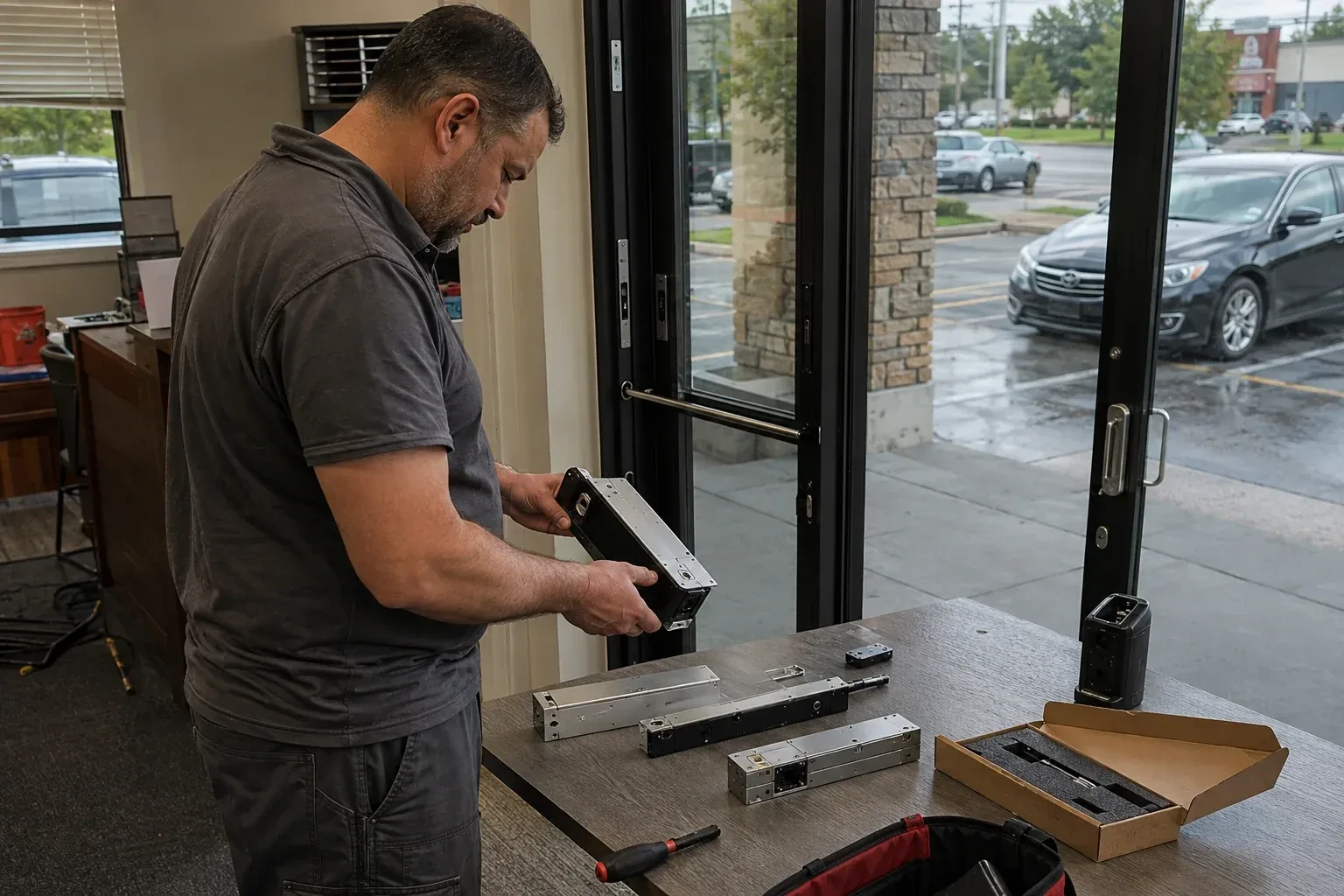
Each door is tested the same way regardless of how simple or complex its hardware is: a valid credential releases it, a disabled one does not, the request-to-exit device or push bar releases a magnetic lock on demand, and the door position switch correctly reports open and closed. Where a fire alarm interface is fitted, the locksmith confirms the lock actually releases when the alarm activates, not only when it is reset afterward. The battery backup is tested by removing main power briefly and confirming every door still behaves the way it is meant to.
Scene 3
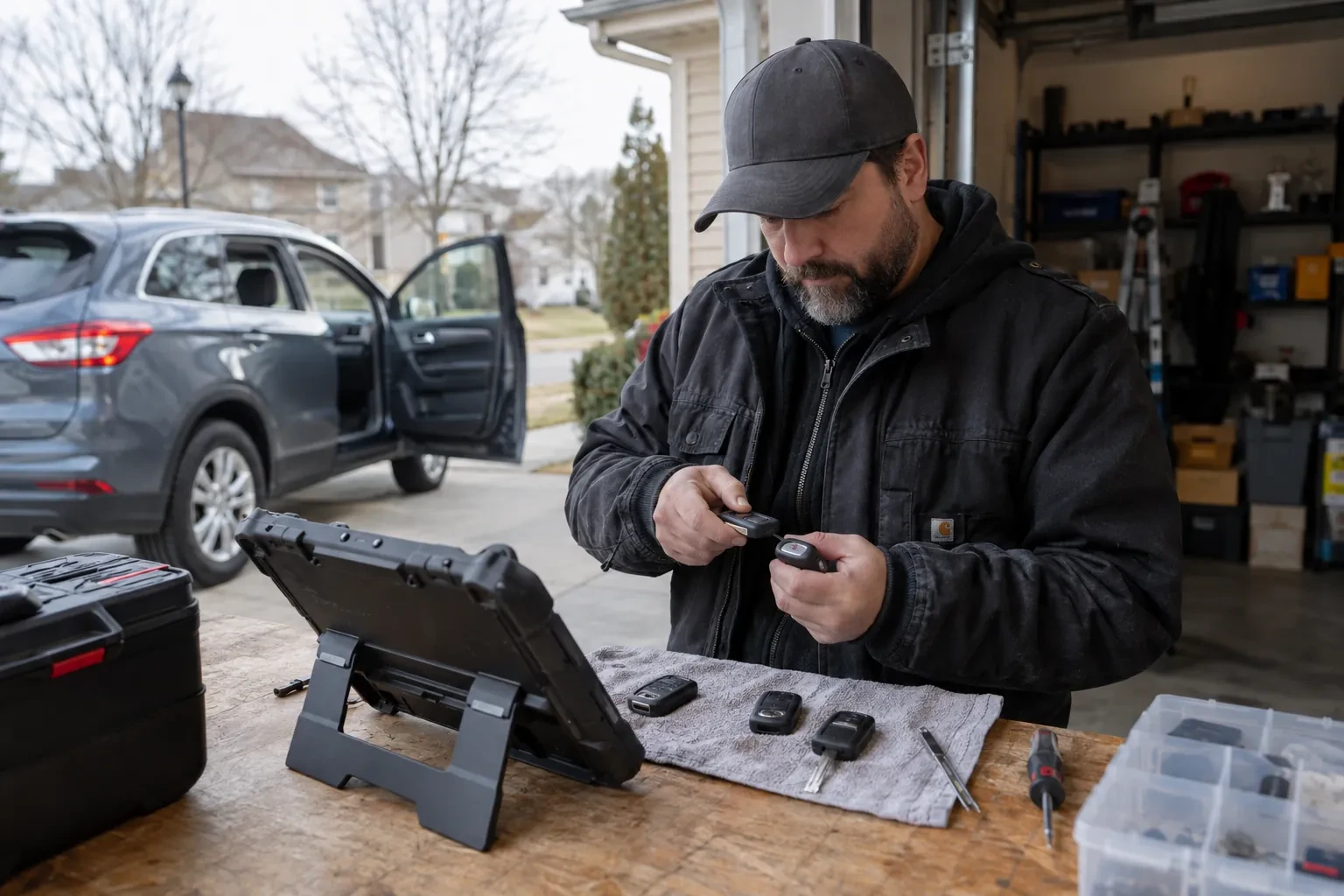
A controlled door depends on power reaching the controller, the lock, and the reader, so battery backup is worth specifying and sizing for that opening rather than assumed to come standard, so a short outage does not leave anyone locked out or, on a fire-alarm-tied opening, locked in. That backup, where fitted, is worth checking periodically, along with the request-to-exit device on any magnetic lock, since both need attention between visits; a fail-secure lock can stay locked from the secure side once power is gone even where people can still leave freely. A short test, a few times a year, catches a fading battery early.
What shapes the quoteAgincourt Locksmith Pros
FeesSame any hour
Outage behaviour depends on how that opening was built: battery backup can be sized to carry the reader, the lock and the controller through a typical outage, so a brief power loss need not lock anyone out or, on a fire-alarm-tied opening, lock anyone in, but that backup and any mechanical key override are specified per opening rather than assumed for every door. Fail-safe hardware unlocks once power has been out longer than the backup lasts; fail-secure hardware stays locked, and what opens it depends on the hardware chosen.
Yes. The controller keeps a running record of which credential was presented at which door and when, available to the administrator at any time, not only after an incident. It can be checked for a specific door, date, or credential, which is useful for everyday questions as much as investigating something unusual, though it identifies the credential used rather than confirming who was physically holding it.
That depends on the platform: the entry log and configuration can live on a local controller and its on-site software, which stay with the business regardless of who installed them, or on a cloud-managed subscription service, where continued access and data export follow that provider's own terms. It is worth confirming at the time of installation which arrangement applies, so the business knows what happens to its records if it later changes providers.
TorontoOntario
Access Control Installation · Toronto, Agincourt, Clarks Corners, Sullivan, Tam O'Shanter
Every square is one home in a hundred.
On-site assessment
The keypad on the side door has started sticking on cold mornings, codes get shared instead of reset, and half the staff still remember a code you meant to retire two hires ago.
(289) 806-4250, open 24/7.
On-site assessment preferred · (289) 806-4250, open 24/7